













GreenPower has achieved what many young companies in the alternative-powered commercial vehicle market have not: a healthy balance sheet.
[Related: GreenPower's first all-electric buses roll off production line]
The Vancouver-based manufacturer of battery-electric school buses, and medium- and heavy-duty vehicles has announced it has boosted its balance sheet by a healthy $6.8 million. Ironically, this was done by cancelling production (for now) for another vehicle.
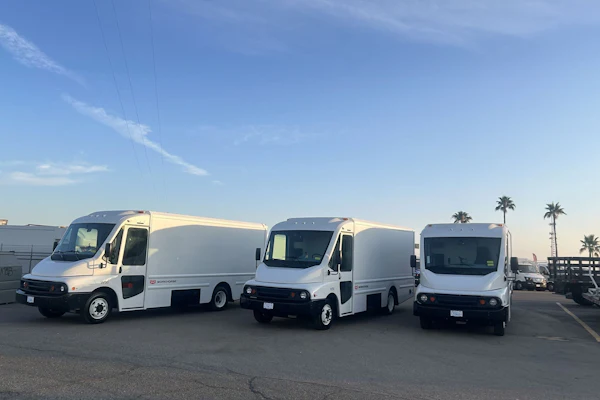
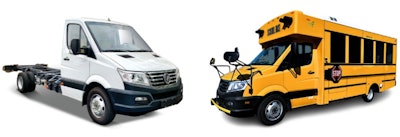
The company reached an agreement allowing it to keep over $6 million in deposits previously made for the production of the EV Star Cab & Chassis, with no obligation to deliver the vehicles. GreenPower will recognize $6.8 million in revenue this quarter after the company and its customers agreed not to move forward with production. The amount, previously recorded as deferred revenue from advance payments, will now be reflected on the company's books as revenue fo Q4 2025.
"The elimination of this deferred revenue reduces the total liabilities of the Company with a corresponding increase in our shareholders equity of $6.8 million strengthening our balance sheet," said Fraser Atkinson, CEO of GreenPower. "The EV Star Cab & Chassis that we manufactured with these payments will be used to produce our all-electric, purpose-built Type A Nano BEAST school bus, which will significantly reduce production lead times for these vehicles. This creates a clear path toward accelerated revenue recognition, margin expansion and improved operating cash flow for GreenPower."
Last month, GreenPower announced it will ramp up production of its EV school bus lineup, backed by $18 million in new financing available in tranches of up to $2 million. The structure is designed to optimize cash flow, letting the company deploy capital in step with production as it scales output.
GreenPower remains the only fully electric company manufacturing both Class 4 Type A and Class 8 Type D school buses, including the BEAST and Mega BEAST. Last summer, GreenPower secured a $5 million deal with New Mexico to deploy six zero-emission school buses—three Type A and three Type D—over a two-year pilot. The company will also partner with Highland Electric Fleets to install and oversee the necessary charging infrastructure.