













What you need to know:
- Commercial ZEV market reset amid 2025 uncertainty, with BEV and FCEV adoption delays extending into 2026
- Battery-electric trucks show strength in medium-duty fleets, final-mile delivery, and yard tractors, while Class 8 long-haul EVs lag
- Hydrogen Fuel Cell Trucks struggle with infrastructure gaps, OEM pullbacks, and canceled federal hydrogen funding
- RNG, CNG, Biodiesel, and Renewable Diesel gain traction as near-term emissions reduction solutions for commercial fleets
- 2025 Alternative Power Survey findings and analysis
Following a turbulent year, the alternative power truck market appears to be entering a period of recalibration in 2026.
While it's impossible to predict the next 12 months with certainty, trends from the last few years suggest that electrification, both BEV and FCEV, is likely to remain in a delayed state.
TRC's Nate Springer, who leads the State of Sustainable Fleets project with support from Penske, Volvo, S&P Global Mobility, and Exelon, summarized the current landscape for Clean Trucking:
"We're seeing a reset and refocusing in the MD and HD EV markets after initial exuberance of 2020–2024. The foundations for future growth are still there, but I would expect a year or two of declining sales from 2024's record, product consolidation by manufacturers to focus on the best uses like yard tractors and delivery vans, and charging development in lowest-cost electricity markets with shared or behind the fence facilities. As those products and projects emerge, we'll also see growing data on use cases where EVs can cut costs for fleets even if battery costs remain flat."
Tumultuous 2025
2025 brought several political and financial setbacks for commercial zero-emission vehicles (ZEVs)—including battery-electrics (BEVs) and hydrogen fuel-cell (FCEV) models—affecting manufacturers and some government bodies such as the California Air Resources Board (CARB), but overall momentum has not collapsed, but has rather entered "peak uncertainty."
[Related: 2025 State of Sustainable Fleets Report - What you need to know]
If anything, now is an ideal time for the industry and companies to recalibrate and adapt to new realities. For some companies, however, recovery is likely out of reach.
Once-promising startups like Nikola Motors, Bollinger Motors, and battery-swap specialist Ample filed for bankruptcy. Is this necessarily bad news? While the market has clearly spoken to a degree, legacy OEMs are far from abandoning ZEVs. If anything, they're taking a cautious wait-and-see stance as the second Trump administration enters its second year.
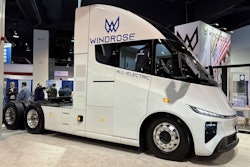
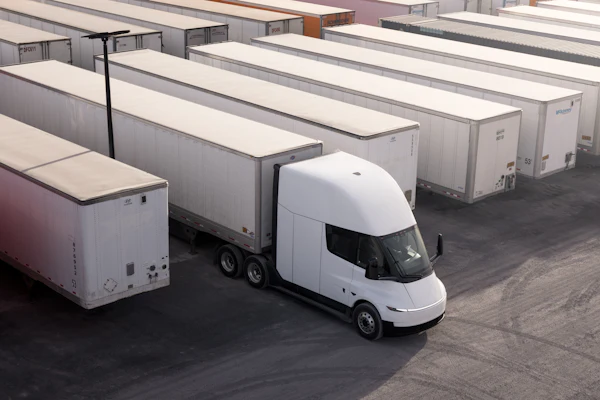
OEMs may also be waiting on the sidelines anticipating the market debut of the Tesla Semi, which is due to begin series production in Nevada later this year. China's Windrose Global E700, a Tesla Semi competitor, received homologation for the U.S. in December.
So, where do BEV and FCEV trucks stand today? Will natural gas—specifically Renewable Natural Gas (RNG) and Compressed Natural Gas (CNG) along with biodiesel and renewable diesel—continue to be the most effective way to reduce C02 emissions while electrification and infrastructure mature? What role will the federal and state governments play?
And how do CCJ, Overdrive, and Clean Trucking readers who took part in our annual Alternative Power Survey perceive the current landscape? The survey explored the state of electric commercial vehicle adoption and the reasons many fleets haven't made the shift yet. More on that shortly.
Battery-electric vehicles
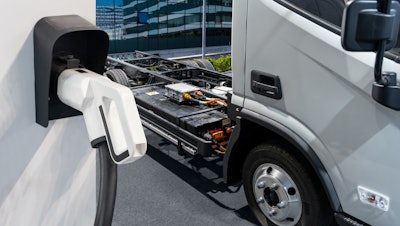
BEVs may be down, but they're not out. In fact, the medium-duty commercial BEV industry, currently valued at around $23 billion, continues to show progress.
Late last year, for example, Workhorse and Motiv Electric Trucks finalized their merger, and Harbinger Motors raised $160 million in funding co-led by FedEx.
The segment also shows promise thanks to proven use cases, such as electrified garbage truck fleets. Despite the challenges, legacy OEMs also continue to invest and launch new MD BEV offerings.
[Related: Peterbilt unveils new medium-duty electric truck lineup, adding 536EV, 537EV and 548EV models]
At the 2026 Consumer Electronics Show (CES), analysts from McKinsey & Company validated the view that the brightest spots for commercial zero-emission vehicles in North America are school buses, final-mile delivery, and yard and terminal tractors.
Unfortunately, there have been some notable disappointments.
Michigan-based Bollinger Motors' collapse in late November was somewhat surprising, as the company had supposedly resolved earlier financial issues and emerged from court-appointed receivership after Mullen Automotive increased its ownership stake.
In another unexpected move last fall, GM pulled the plug on the Chevrolet Brightdrop last-mile delivery van—a direct competitor to the Rivian Electric Delivery Vehicle (EDV).
[Related: Rivian's Electric Delivery Van to miss out on new autonomy and AI tech, for now]
Quebec-based electric school bus manufacturer Lion Electric, since renamed LION, filed for bankruptcy in December 2024. Last spring, it was forced to ground its surviving 1,200-unit fleet in the Montreal area due to fire concerns. Although the issue was resolved quickly, other safety concerns—which continue to affect several U.S. school districts—remain unresolved. LION's new owners later declared U.S. warranties null and void, a controversial decision that has left districts in the lurch, forcing them to return aging diesel buses to service to pick up the slack.
The company is currently under investigation by several U.S. law firms for potential federal law violations.
[Related: ZEV prospects dim in a down truck market]
Meanwhile, Charging-as-a-Service (CaaS) and Trucking-as-a-Service (TaaS) business models—pioneered by companies like WattEV and Zeem Solutions—are gaining traction, particularly in Class 8 drayage operations. So far, these deployments are largely concentrated in California and have yet to expand to long-haul, cross-country routes typically handled by diesel and RNG/CNG-powered semis. The broader coast-to-coast rollout remains to be seen.
[Related: WattEV CEO knows how to electrify freight at diesel prices]
In summary, light- and medium-duty commercial BEVs continue to prove themselves across a range of applications, while long-haul, heavy-duty Class 8 BEVs still have significant ground to cover.
Hydrogen fuel cell vehicles
Nikola's bankruptcy was, without question, the most significant headline in the commercial FCEV space over the past 12 months. Clean Trucking covered several post-bankruptcy stories, including a Toronto-area hydrogen fueling station that received funding but ultimately never came to fruition.
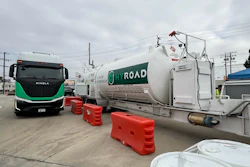
Last August, Austin, Texas-based Hyroad Energy won the bankruptcy auction for Nikola, acquiring 113 Tre fuel-cell electric semi-trucks along with spare parts, software platforms, operational infrastructure, and related intellectual property. A few months later, the company confirmed plans to restore the trucks' subscription service, provide ongoing support and maintenance, and revive Nikola's hydrogen refueling network in California and Texas.
In an unexpected move at ACT 2025, Honda revealed its Class 8 hydrogen fuel cell truck concept powered by three fuel cell modules. The OEM confirmed the module will enter production in 2027 but no word yet whether it'll be paired with the semi.
Hyundai remains the only legacy OEM to mass-produce a road-legal heavy-duty FCEV Class 8 semi, the XCIENT, though sales have been limited. To date, 35 units have been deployed in California through the NorCAL ZERO Project, with an additional five trucks supported by the EPA's Targeted Airshed Grants program. Hyundai has also introduced 21 XCIENTs to support production at its Metaplant America facility in Georgia.
Further dampening hopes for hydrogen fueling was the DOE's October announcement canceling billions of dollars in green hydrogen production projects.
Despite some ongoing development, FCEV commercial vehicle technology has not achieved sustained momentum in North America, and the government's recent decision further complicates progress.
Alternative fossil fuels
While electrification continues to face significant hurdles, alternatives to traditional diesel—particularly RNG and CNG—are gaining momentum, along with biodiesel and renewable diesel. Traditional diesel remains the dominant fuel of choice for fleets, according to an ATRI survey, while Liquefied Natural Gas (LNG) is also steadily growing in popularity.
As a quick refresher, RNG comes from organic waste like farms or landfills, making it renewable and often carbon negative. CNG is regular natural gas that's been compressed for vehicle use. LNG is natural gas cooled to a liquid state.
[Related: As electric truck demand slows, CNG and RNG-powered trucks accelerate]
RNG recently gained bipartisan support when the House and Senate proposed last April the Renewable Natural Gas Incentive Act of 2025, which would provide a $1.00 per gallon tax credit for RNG used in transportation through 2035. In addition, trucking groups applauded the Trump administration's "Big Beautiful Bill," which restored tax parity between sustainable aviation fuel (SAF) and other biofuels like biodiesel and renewable diesel.
The market launch of the Cummins X15N engine continues to further strengthen the business case for natural gas fuel options, attracting major customers such as Walmart and legacy OEMs like Peterbilt and Kenworth.
Also noteworthy is that six of the 13 vehicles that took part in the North American Council for Freight Efficiency's (NACFE) 2025 'Run on Less' event last summer either ran on biodiesel, renewable diesel, or natural gas. As fleets weigh the ongoing challenges of electrification, alternatives like RNG, CNG, biodiesel, and renewable diesel continue to gain popularity.
[Related: Hexagon Agility's CNG systems equip 100 Cummins-powered natural gas trucks in Mexico]
NACFE Executive Director Mike Roeth, however, flagged a potential challenge:
"I'm worried that truck OEMs are spreading themselves across too many technologies, which could reduce their scale," he warned.
2025 Alt Power Survey
As the push toward cleaner transportation accelerates, our annual Alternative Power Survey revealed how fleet operators are navigating the shift to electrified trucking, highlighting everything from charging challenges and infrastructure concerns to opinions on electric truck manufacturers, and offering a clear view of what's driving—and slowing—the adoption of electric trucks across the industry.
The Alt Power Survey, which ran from February 11 to February 26, 2025, asked respondents questions regarding their fleet size, truck counts, and operating regions. It also gathered viewpoints on fuel economy regulations, many of which have since been rolled back by the Trump administration.
Of course, special thanks goes out to our readers who took part in the survey. Your time and opinions are greatly appreciated.
General findings
The 2025 Alt Power Survey revealed that while the trucking industry, represented by a mix of owner-operators and fleet management, was concerned about new emission mandates from the previous administration, as well as continued reservations about adopting alternative fuels. The primary obstacles identified for both BEVs and FCEVs are the lack of robust fueling/charging infrastructure, high upfront costs, and inadequate vehicle range for demanding operations, specifically long-haul.
Despite these hurdles, 48% of respondents reported they are actively engaged in early-stage discussions and taking immediate steps to reduce emissions, such as maximizing diesel efficiency. However, the disparity grew between fleets and owner-operators with 68% of fleets more likely to be in the "discussion" phase compared to the latter at 38%.
The survey also highlighted the competitive landscape, revealing divided opinions on which company is leading the BEV and FCEV race, as well as varying levels of engagement with state and federal grants and infrastructure investments—underscoring the industry's cautious and fragmented approach to the gradual zero-emission transition.
In general, a "wait and see" stance dominated, particularly among owner-operators, nearly half of whom (45%) have not engaged in any discussions about transitioning away from diesel. While larger fleets appear more proactive, with 68% involved in early-stage talks, the vast majority remain in a research only phase, mainly because they're hesitant to commit to major transitions amid economic uncertainty.
Rather than making the immediate leap to BEVs or FCEVs, the industry is largely leaning on diesel efficiency. Most respondents prefer to maximize current technology as their most effective tool for emissions reduction, such as prioritizing the purchase of late-model Class 8 trucks, aerodynamic kits, and idle-reduction systems.
In today's economic climate, the general sentiment suggests that achieving cleaner diesel is a far more realistic and attainable goal for most carriers than zero emissions.