













What you need to know:
- Tesla Megacharger network expansion adds 64 new charging sites across 15 states after plans to install Megachargers at 20 freight corridor locations
- Texas (19) and California (17) lead planned Megacharger buildout as Interstate 5 and Interstate 10 freight corridors anchor the national rollout
- Tesla Semi Megachargers deliver 1.2 MW DC fast charging, enabling 400 miles of range in 30 minutes for Class 8 electric trucks
- Tesla Semi factory in Nevada targets 2026 production start, aiming for 50,000 electric trucks annually after logging 7.9 million fleet miles
Less than a month after Pilot Travel Centers announced a deal with Tesla to install Megachargers at 20 locations along major freight corridors in five states, the EV manufacturer has now updated its "Find Us" map to include 64 additional charging sites across 15 states.
[Related: Tesla Semi reportedly faces price increase, delayed again]
 Tesla's proposed West Coast Megacharger sites.Tesla
This latest announcement was posted on LinkedIn by Jason Gies, a senior member of the Tesla Semi's business development team.
Megacharger sites—including those marked "coming soon"—are beginning to form a true nationwide network rather than isolated dots on a map. The Midwest is taking shape with Chicago emerging as a key hub, while the Southeast is rapidly building out coverage. Instead of scattered locations, major freight corridors are starting to link together into a connected backbone.
 Tesla's proposed Midwest and East Coast Megacharger sites.Tesla
"If you run regional or long-haul freight, this matters," Gies writes. "Public charging gives you route flexibility. Behind-the-fence charging keeps daily operations tight. MCS alignment signals where high-power charging for Class 8 is headed."
Megacharger breakdown
A closer examination of this map reveals that Texas currently has the highest number (19) of planned Megacharger sites. California comes second with 17 upcoming sites, and the buildout is spreading strategically across multiple regions.
Two highways stand out in the early rollout.
Interstate 5 stretches the length of the West Coast, linking key ports and logistics hubs from Southern California up to the Pacific Northwest. Interstate 10 serves as a vital cross-country corridor, moving freight from the West Coast through the Southwest and into Texas. Not coincidentally, these are the same routes where early Tesla Semi fleets, including those operated by PepsiCo, have already been putting trucks to work.
[Related: Tesla boosts Semi charging infrastructure in latest expansion effort with PepsiCo]
Florida, Georgia, Illinois, and Washington are leading the next wave, with four planned sites apiece. New York and Nevada follow with two each. Arizona, Colorado, Utah, Oregon, Indiana, Pennsylvania, and Maryland are also on the roadmap, with one upcoming location in each state.
 Tesla's proposed Southeast Megacharger sites.Tesla
What are Megachargers?
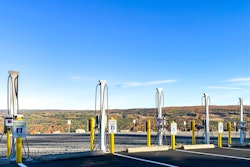
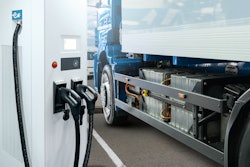
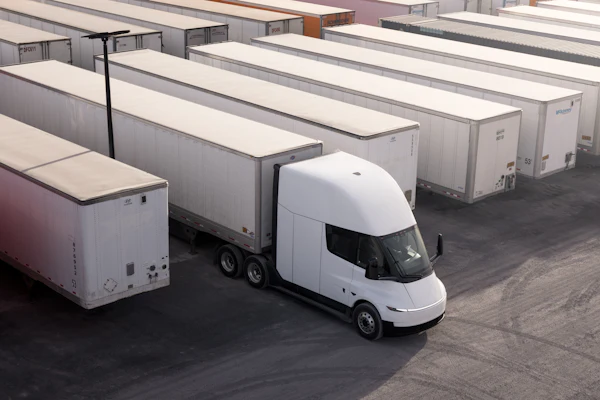
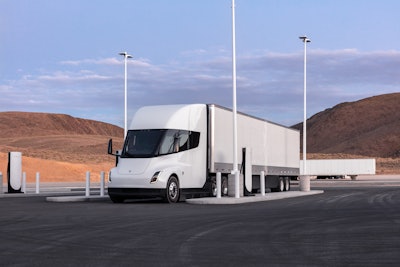
Megachargers are ultra-high-output DC fast chargers built exclusively for the Tesla Semi. Engineered to deliver more than one megawatt of power—up to about 1.2 MW—they're designed to minimize downtime, replenishing roughly 400 miles of range in about half an hour.
Tesla engineers released a video late last year demonstrating a Semi Megacharging session where power output reached a peak of 1.2 MW (1,206 kW).
Last year at the ACT Expo, Tesla Semi Program Manager Dan Priestley confirmed plans to deploy public charging network for the Semi truck that'll include 46 stations in 2027.
He added that the Tesla Semi fleet has collectively logged 7.9 million miles so far, though he did not disclose how many trucks contributed to that total. He also noted that the company's dedicated Semi plant in Nevada is close to completion and remains on schedule to ramp up series production in 2026, with a long-term target of building roughly 50,000 trucks per year.
[Related: Tesla announces major Semi factory progress]