













What you need to know:
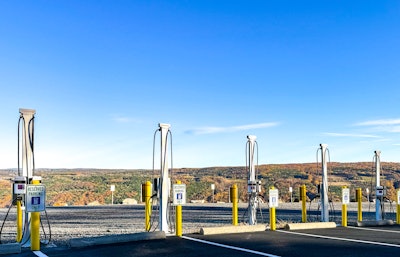
- 100% U.S.-Made EV Chargers – Federal electric vehicle charging station policy now requires full domestic manufacturing, driving American-made EV infrastructure.
- Buy America EV Standards Update – Strengthened U.S.-made content rules boost American manufacturing jobs, EV supply chains, and homegrown industry growth.
- Federal EV Charging Network Expansion – Streamlined EV infrastructure grants enable states to deploy public and commercial EV charging stations faster.
- National Security & Domestic EV Supply – Reducing dependence on foreign EV components protects critical supply chains and strengthens cybersecurity for EV technology.
In a sweeping shift to federal electric vehicle policy, Transportation Secretary Sean Duffy revealed plans this week to tighten domestic manufacturing standards for government-backed charging stations.
The overhaul would strengthen existing 'Buy America' rules by increasing the required U.S.-made components from 55% to a full 100%—meaning any EV charger built with federal funding would have to be produced entirely within the United States once the rule is finalized.
[Related: Trump, EPA make good on promise to toss emissions regs]
Officials framed the move as a boost for homegrown industry, arguing it would fuel American innovation, reinforce the nation's manufacturing base, and create jobs while advancing wider economic and national security priorities. The revised waiver would go beyond requiring final assembly in the United States, instead obligating that every major component in federally funded EV charging systems be sourced and produced domestically.
In a very direct rebuke of the previous administration, Secretary Duffy said earlier EV infrastructure initiatives "failed to deliver EV chargers and promote domestic manufacturing," adding that recently revised guidance has streamlined the process for states to roll out charging networks, and described the expanded 'Buy America' standards as part of a broader shift toward prioritizing U.S. industry.
"We've already updated the guidance, slashed red tape, and made it easier for states to efficiently build out this infrastructure—delivering nearly double the amount of charging ports completed during the Biden Administration. Now we're ensuring that if Congress wants to see these chargers built, we put America First. Doing so will unleash American manufacturing, protect our national security, and prevent taxpayer dollars from subsidizing our foreign adversaries," Duffy emphasized.
[Related: Groups press states to leverage public funds to lower electric truck prices]
Federal Highway Administration Administrator Sean McMaster reinforced Duffy's message, underscoring the administration's push to expand the domestic industrial base and shore up vital supply chains. The agency's plan would revise its current 'Buy America' waiver for EV chargers, updating the policy framework first issued in the Federal Register in 2023.
Administration officials say domestic manufacturers are now positioned to meet demand for EV chargers, arguing that stricter sourcing rules would accelerate the transition to U.S.-based production. Backers maintain the tougher standard would strengthen the competitiveness of American companies, curb dependence on overseas components, and mitigate potential cybersecurity risks tied to foreign-built technology.
The revised waiver would be implemented once it clears the federal review process, potentially requiring states and contractors pursuing federal support for EV charging projects to meet a 100% domestic content standard in both procurement and installation.