













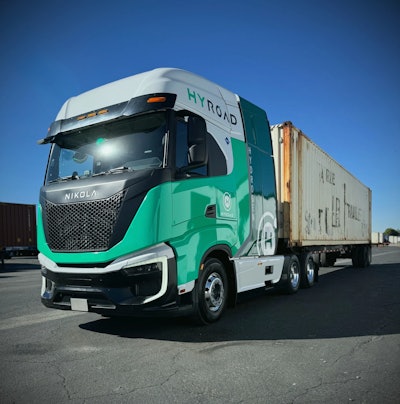
What you need to know:
- Nikola bankruptcy destabilized the hydrogen trucking industry, leaving its Class 8 hydrogen fuel cell trucks without OEM support or hydrogen fuel availability.
- Hyroad Energy secured Nikola Tre FCEV assets, hydrogen truck inventory, fleet software, and intellectual property to revive commercial hydrogen trucking operations.
- Hydrogen Trucking-as-a-Service (TaaS) delivers truck leasing, maintenance, and fleet uptime guarantees, lowering fleet electrification costs.
- California hydrogen fueling infrastructure and Texas hydrogen refueling stations support zero-emission freight corridors, port drayage, and scalable hydrogen networks.
Nikola Corporation's hydrogen fuel cell semi-truck customers were hit hard last February when the company declared bankruptcy, leaving them without factory support or affordable hydrogen fuel for their Nikola Tre Class 8 rigs.
Last August, a potential savior stepped up.
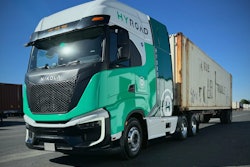
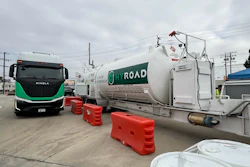
Hyroad Energy, an Austin, Texas-based privately held company founded in 2023 that specializes in the Trucking-as-a-Service (TaaS) business model, jumped at the opportunity to fill the market void. The company won the bankruptcy auction for Nikola, acquiring 113 hydrogen fuel cell (FCEV) semis, along with spare parts, software platforms, operational infrastructure, and intellectual property assets.
In the final weeks of 2025, Hyroad made a series of big announcements, specifically the restoration of Nikola trucks' connectivity and subscription services, comprehensive support for hydrogen trucking—covering maintenance, software, and parts—and a new partnership with Pacific Clean Fuels and OneH2 to revive one of California's largest hydrogen-powered truck fleet deployments.
With these initiatives now underway, Clean Trucking caught up with Hyroad's Chief Technology Officer, Aaron Lapsley, to discuss the company's transition from a consultant-based startup to a TaaS provider, and that it is now "laser focused" on expanding hydrogen refueling in Southern California and the Houston-area regions.
Why use the TaaS model?
The TaaS model, essentially, flips the traditional fleet ownership model on its head. Instead of buying trucks and managing everything that comes with them, operators pay a recurring fee that bundles the vehicle, upkeep, insurance, and—when it's electric—the charging setup. The result is a simpler, pay-as-you-go way to run a fleet, one that sidesteps the hefty upfront price tag of electric trucks and shifts spending from large investments to more manageable operating costs.
Companies like Zeem Solutions and WattEV are already using this model with proven success. However, these TaaS companies focus on battery-electric vehicles (BEVs), not FCEVs.
Hyroad is now the first U.S. company to apply the TaaS model to hydrogen fueling. In fact, Lapsley believes the model is more critical for FCEVs than BEVs due to the complexity of handling "the molecule" and the specialized skill sets required, which are often drawn from the oil and gas industry.
"We feel that model continues to makes a lot of sense for hydrogen, and is maybe even more important for hydrogen fuel cell trucks than battery-electric because there's the added complexity of dealing with the hydrogen side," Lapsley explained. "And a lot of those skill sets come from a traditional energy, oil and gas background instead of being sort of all electrical. The skill types that you need are here too in some sense. And there's this kind of complexity of dealing with the molecule."
That complexity is because hydrogen refueling must handle the physical and chemical behavior of hydrogen as a molecule, which requires specialized oil and gas–style skills for compression, storage, and safety, rather than just managing electricity.
Several members of Hyroad's founding team members came from HYLA—Nikola's hydrogen fueling division—meaning they understood from the get-go the complexities involved with the element.
The company currently charges $299 per month for the Nikola-powered-by-Hyroad software connectivity for existing Nikola owners and operators, and Lapsley confirmed that the "TaaS model is not necessarily an all-or-nothing package."
Why? Because "it depends on the customer's needs and capabilities," he explains.
For example, Hyroad "is working with one leasing customer now who expects to provide some level of its own behind-the-fence refueling. They have that capability and desire to operate some capacity themselves. We do not, however, expect for this to be the norm. Our extensive conversations with the market suggest that most truck-as-a-service customers are looking for the simplest solution possible to adopt in this early stage of market development, and Hyroad expects to bundle refueling in those deals to meet the customers' expectations."
Lapsley added that TaaS pricing is "specific to a customer's needs and use cases."
California and Texas focus
Back in 2024, HYLA set a goal of having 14 modular stations operational by the end of the year, with a longer-term target of 60 stations. That clearly has not materialized because of Nikola's closure.
While Hyroad has not disclosed a precise number of stations currently in operation, California and Texas remain critical markets. The Port of Houston Authority, for example, previously announced that it had received a $25 million federal grant to build a heavy-duty hydrogen fueling station. To date, the Trump administration has not canceled this grant, unlike several other hydrogen-related projects.
"We've been focused on Texas and California as our primary markets from the beginning and that hasn't changed," Lapsley continued. "One of the things we need to be able to do in those markets is to lease trucks."
While Hyroad's service center is already operational, its refueling infrastructure is still in the development phase, with three projects planned for the Los Angeles area and two for Houston. These refueling stations are expected to come online sometime this year.
"The projects Hyroad is involved with will typically be designed primarily for heavy truck refueling, so they really are meant for medium- and heavy-duty vehicles—though it's possible that fuel cell cars might be able to refuel at those too. We often get inquiries about refueling [Toyota] Mirai FCEV passenger cars."
By focusing on these high-density geographic hubs and leveraging local subsidies like those at the Port of Long Beach, Hyroad is aiming to offer more competitive fuel pricing than current retail locations while providing customers with a full-service lease that includes uptime guarantees and specialized technical support from its team of ex-Nikola experts.
"The main thing that we've got online over the last six months is our service capability in Southern California, right by where Nikola's previous service center was in Fontana. So we're able to actively service trucks and are doing quite a bit of that work now and scaling that up."
Software platform reconnection
As Clean Trucking previously reported, there has been a lack of affordable hydrogen fuel since Nikola's bankruptcy, forcing some owners and fleets to ground their rigs. While Hyroad does offer affordable hydrogen fuel, the effort to reconnect trucks to its software platform is moving forward independently.
Fortunately, Hyroad says it has reconnected 52 Nikola semis to its software platform, including 48 customer-owned trucks—a number that is "increasing rapidly." The company is also providing physical maintenance and repair services for 50 trucks, many of which overlap with those that have been reconnected to the software platform.
"We're starting right now to get 50 of the Hyroad trucks—about half of our fleet—ready to get completely spun back up and into a customer's hands and we're just in the final stage [and finalizing] the lease agreement," Lapsley confirmed.
And what about fueling passenger FCEVs, such as the Mirai?
Coast-to-coast infrastructure?
The often discussed nationwide charging infrastructure—particularly for commercial BEVs—has yet to materialize, and there is no clear timeline for when it might. Could a Hyroad-built and managed hydrogen fueling infrastructure emerge as an alternative?
Not in the near future but it shouldn't be ruled out entirely.
"There are no plans beyond what everyone in the industry is thinking about, such as linking up the I-10 corridor between Houston and LA. Things like [a nationwide fueling infrastructure] are obviously things that we're interested in over time," Lapsley said. "But one of the things that's allowing us to sort of execute more quickly and economically is that we're able to geographically focus, particularly now that we have this fleet where we can choose where to deploy it. We're very laser focused on the LA/Southern California metro area and then Houston as our starting points."