













What you need to know:
- Horizon Motor has partnered with Chery Automotive to secure a 1 GWh supply of solid-state batteries, giving the Ohio-based commercial EV manufacturer early access to next-generation energy storage for its Class 3–8 electric trucks.
- The company expects solid-state batteries to deliver improved range, safety, and ultra-fast charging, allowing Horizon to move away from swappable LFP packs as the new chemistry offers higher energy density and near–10-minute recharge times.
- Due to regulatory requirements—especially in California—Horizon does not anticipate deploying solid-state batteries in production trucks until at least Q1 2027.
- Despite tariffs and supply-chain challenges tied to China-sourced components, Horizon continues to grow its U.S. presence with rising demand for its vocational EVs, supported by strong customer feedback and state incentive approvals.
It has been a turbulent stretch for several startups in the battery-electric commercial vehicle space.
Late last month, Bollinger Motor officially ceased operations, leaving the fate of its parent company, Bollinger Innovations (formerly Mullen Automotive), uncertain. In contrast, Workhorse and Motiv Electric Trucks moved forward, completing their long-discussed merger.
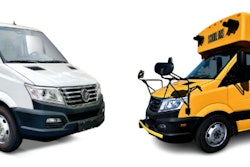
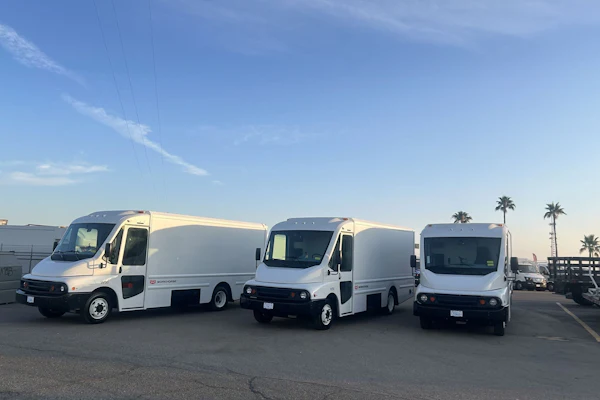
Amid these industry shakeups, Horizon Motor—a still relatively low-profile OEM based in Athens, Ohio—has been working steadily to expand its presence. Horizon assembles Class 3–8 vocational BEV trucks engineered for delivery, towing, municipal, and industrial applications. This week, the company announced a significant step: a new agreement with China's Chery Automotive to secure a supply of 1 gigawatt-hour (GWh) of solid-state batteries.
"This agreement represents a major step forward for Horizon and for the vocational EV industry," said Sean Jones, CEO of Horizon Motor. "Securing access to solid-state battery technology positions us to scale production and deliver higher-performance electric trucks to fleets across the country."
Solid-state batteries are widely viewed as the next major advance in EV energy storage, offering higher energy density, improved safety, better range, and the prospect of longer life cycles compared with lithium-ion and LFP packs.
Why solid-state, and why now?
"We have investments in three different companies working on solid-state batteries, so we can stay ahead of the curve," Jones told Clean Trucking. "None of them are ready for large-scale production yet. But we've been watching closely, and one of the companies, AXXIVA, was heavily invested in Chery and they have a 2 million sq. ft. production facility. We've been talking with Chery on and off for a while, and they mentioned that investment."
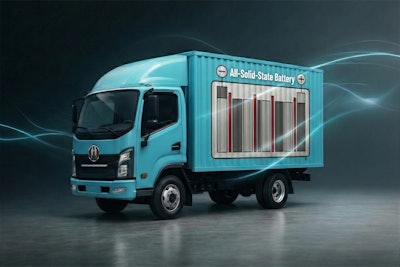
 AXXIVA's solid-state battery on display.Horizon Motor
Horizon's existing trucks feature swappable batteries, but Jones says that capability will likely become unnecessary once solid-state packs arrive. "I don't think we'll do swappable because it no longer makes sense. If you have the power there you can charge them in 10 minutes tops."
He estimates solid-state batteries will appear in Horizon’s lineup no earlier than Q1 2027 due to regulatory considerations.
[Related: Swappable batteries? Horizon Motors wants to make it happen]
"We wanted to get in the ground floor as quickly as possible," Jones added. "Even with the agreement it'll take a while to get everything configured. It's a different battery chemistry."
Regulatory approvals—particularly in California—will be one of the biggest hurdles. Still, Jones notes that Horizon has "built more trucks than Mullen and Bollinger combined. But we'll be shipping with the LFPs for another couple of years."
Most components will carry over unchanged for the solid-state models, but the new batteries will require extensive testing.
Tariffs and supply chain realities
Horizon continues to source its batteries and several key components from China—an approach that comes with a price.
"Our prices would be significantly lower if not for tariffs," Jones admits. "At this point, how fast we can make the trucks is right around the same speed that we're able to sell. We're only making like two trucks per day, Class 3-8. Class 5 tow trucks have been selling really well, and our Class 6 tow trucks are gaining popularity. There's also a fair amount of box trucks on order, and a significant number of California-bound trucks but we can't deliver them until the California Air Resources Board (CARB) approves."
Despite these constraints, Horizon is still drawing interest from U.S. customers.
"We have a number of trucks in California in customer hands so they can test them and give us feedback, especially tow trucks, which we can't sell yet. They've been driving them for thousands of miles and we got really good feedback so far."
Customer feedback has already driven design adjustments, especially for tow truck beds originally created by a German supplier. Jones says American tow operators offered extensive suggestions about what they needed.
"We probably sold 20 tow trucks at one show. Most are going to New Jersey and New York. The trucks have already been approved by those states' incentive programs."
[Related: Horizon Motor earns EPA certification for new battery-electric truck lineup]
Looking ahead with Chery
The new partnership with Chery places Horizon among the leading U.S. manufacturers preparing to bring solid-state battery systems to commercial-scale production. Additional technical specifications and deployment details will be released as the program progresses.
"We are pleased to collaborate with Horizon Motor as they advance zero-emission commercial transportation in North America," a Chery spokesperson said. "Solid-state technology brings unmatched safety, durability, and efficiency to vocational applications."