












What you need to know:
- Toyota Motor North America and Hyroad Energy partner to deploy 40 hydrogen fuel cell Class 8 trucks in Southern California, advancing zero-emission freight and clean trucking solutions
- The agreement creates a full hydrogen trucking ecosystem, combining fuel cell trucks, telematics, software services, and hydrogen refueling infrastructure to scale sustainable logistics operations
- Hyroad builds momentum after acquiring Nikola FCEV assets, positioning itself as a key player in hydrogen-powered transportation and heavy-duty zero-emission trucks
- Hydrogen fuel cell Class 8 trucks deliver up to 500-mile range, fast 15–20 minute refueling, and zero tailpipe emissions, making them a viable alternative to diesel semi-trucks for long-haul freight
At the 2026 ACT Expo in Las Vegas, Toyota Motor North America announced the signing of an agreement with Texas-based Hyroad Energy to roll out 40 hydrogen fuel cell Class 8 trucks across Southern California, marking a significant step in scaling zero-emission freight operations.
[Related: Hyroad Energy, Total Hydrogen Solutions strike deal to expand hydrogen truck fueling in Texas]
Hyroad, if you recall, bought in August 2025 117 Nikola FCEV trucks, spare parts, software platforms, and IP assets from bankrupt Nikola Motors.
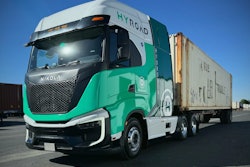
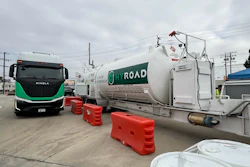
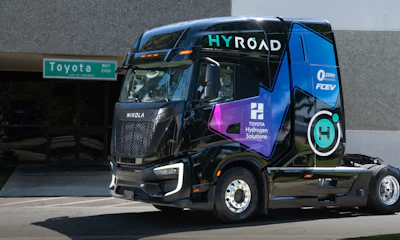
And now, a Hyroad-powered truck is featured at Toyota's ACT Expo exhibit. Under the agreement, Hyroad will supply the trucks along with maintenance, telematics, and software services to support Toyota's logistics network.
Toyota, in turn, will provide hydrogen fuel via its developing refueling infrastructure in Ontario, California. The companies aim to integrate the critical elements of a viable hydrogen trucking ecosystem—vehicles, digital systems, and fuel supply—within a single, coordinated commercial model.
[Related: Hyroad Energy partnership aims to boost California's hydrogen trucking network]
For Toyota, the initiative builds on more than three decades of fuel cell development and reflects a broader, long-term investment in the hydrogen value chain. The company continues to expand its focus beyond vehicle technology to include refueling infrastructure, positioning heavy-duty trucking as a key use case for scaling the ecosystem.
A Class 8 fuel cell truck, for example, can carry up to 70 kilograms of hydrogen—roughly equivalent to the combined capacity of about 12 Toyota Mirai sedans—highlighting the potential for high-demand freight applications. Comparable to a diesel semi, a Class 8 fuel cell truck can refuel in roughly 15–20 minutes and deliver an estimated range of up to 500 miles per fill.
[Related: After Nikola's fall, Hyroad Energy rises in hydrogen trucking]
The key difference: instead of tailpipe pollutants, hydrogen-powered trucks emit only water vapor, offering a zero-emission alternative for long-haul freight.
"Accelerating the hydrogen economy requires collaboration, and Toyota is proud to work with Hyroad to move the heavy-duty sector forward," said Jason Zahorik, general manager, Toyota Hydrogen Solutions. "By bringing the critical elements together, we’re demonstrating how fuel cells create tangible value across supply chains while advancing a foundational pillar of the hydrogen economy. With hydrogen, we share a vision for cleaner, more powerful and more energy independent mobility."
"Toyota has done exactly what great allies do—they've brought genuine hydrogen expertise to the table and made thoughtful, strategic decisions," said Dmitry Serov, founder and CEO of Hyroad Energy. "They’re not waiting for someone else to build this ecosystem. They’re investing in it directly, and that’s what makes this meaningful. When fueling, vehicles, software and operational commitment all come together, hydrogen trucking works."