













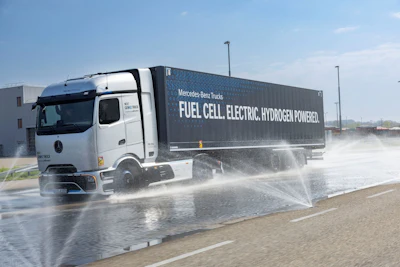
What you need to know:
- hydrogen fuel cell trucking Europe remains relevant despite industry headwinds
- Daimler Truck, Volvo Group, and Toyota fuel cell partnership formed through cellcentric joint venture
- cellcentric fuel cell systems heavy-duty vehicles positioned as central development hub
- hydrogen technology investment decarbonization transport drives collaboration and scaling efforts
Hydrogen fuel cell technology may be facing headwinds, particularly in the U.S., but it remains firmly in the mix for commercial trucking in Europe.
[Related: After Nikola's fall, Hyroad Energy rises in hydrogen trucking]
Daimler Truck, Volvo Group, cellcentric, and Toyota Motor Corporation have just announced the signing of a preliminary, non-binding agreement to work together on fuel cell technology. Never heard of cellcentric?
[Related: Volvo's hydrogen combustion trucks begin testing, promise diesel-like power and lower C02]
Cellcentric is a joint venture between Daimler Truck AG and the Volvo Group, established in 2021 to develop, produce, and commercialize fuel cell systems for heavy-duty commercial vehicles and other applications.
Under the plan, Toyota is joining cellcentric as an equal partner alongside Daimler Truck and Volvo. The companies aim to combine their expertise to develop, produce, and sell fuel cell systems for heavy-duty vehicles. Toyota and cellcentric will also collaborate closely on developing and manufacturing fuel cell unit cells—the key components of these systems—along with related technology, with the goal of creating more competitive products.
 From left: Daimler Trucks President and CEO Karin Radstrom, Toyota President and CEO Koji Sato, and Martin Lundstedt, president and CEO of Volvo Group.Daimler Trucks
"We are proud that Toyota plans to join cellcentric as a shareholder. This will enable us to strengthen development and further scale hydrogen technology, which we believe complements battery-electric drives in decarbonizing transport," said Karin Radstrom, president and CEO of Daimler Truck.
[Related: Nikola Motors, once a Wall Street darling, files for bankruptcy]
By combining Daimler Truck and Volvo's commercial vehicle expertise with Toyota's fuel cell and manufacturing capabilities, the partners say them aim to boost cellcentric's technology and competitiveness. The joint venture is being positioned as the central hub for developing, producing, and commercializing fuel cell systems for heavy-duty on- and off-road applications.
"We are extremely proud that Toyota intends to join as a shareholder of cellcentric—a great sign of trust in our company from one of the world's leading automotive companies. Together, in this new set-up, we look forward to seizing the opportunity to significantly improve our company across the entire value chain," added Nicholas Loughlan, managing director and CTO of cellcentric.
[Related: Hydrogen-powered bus explosion raises safety concerns]
The OEM's equal ownership stakes in cellcentric, which will remain an independent company serving a broad range of heavy-duty transport and stationary applications, will slightly vary in terms of focus. Toyota is expected to invest in the business as part of this move, while all three companies will continue to compete in their core markets.
The partnership is designed to pool resources and scale up fuel cell development, supporting wider adoption of hydrogen technology in line with global decarbonization goals. The agreement is non-binding, with further talks ongoing.