













What you need to know:
- Fleet electrification at scale is now an execution challenge, with PG&E and ABB E-mobility showcasing real-world EV fleet infrastructure deployment
- The industry sits in a "messy middle" of EV adoption, where electric vehicles work, but charging infrastructure and grid capacity are still catching up
- Utility fleet electrification demands reliability and uptime, with varied EV use cases shaping charging strategy and fleet operations
- Energy management and grid constraints are the biggest hurdles, driving the need for smart charging and flexible grid solutions
Fleet electrification is no longer a theory problem. It's an execution problem.
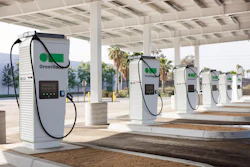
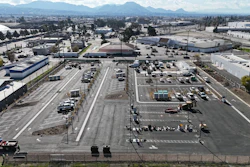
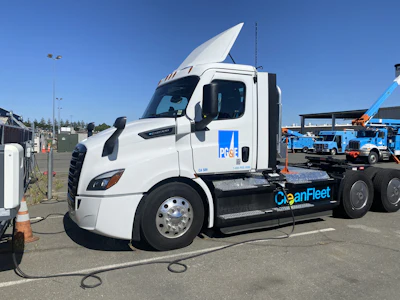
Since 2024, Pacific Gas and Electric Company (PG&E) has been working with charging provider and manufacturer ABB E-mobility to build out its large-scale fleet infrastructure. Today, that partnership is offering a real-world look at what it actually takes to electrify complex, mission-critical operations.
It's no easy task.
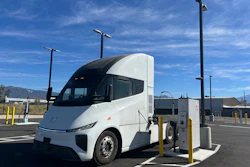
The Oakland, California-based utility says it aims to electrify roughly 3,800 vehicles by 2030 and nearly 10,000 by the 2040s, spanning everything from light-duty pickups to heavy-duty trucks tied to emergency response.
"We are very much leading by example," explains Paul Doherty, manager of clean energy and innovation communications at PG&E. "We're showing how a large, operationally complex fleet can transition... while still maintaining service reliability and safety."
Mid-game challenges
While the industry has moved past pilot projects, it still hasn't reached simplicity.
"We have sort of moved out of what I would call the early adopter stage," said John Stahlbusch, vice president of public and EV fleet charging at ABB E-mobility. "We're not necessarily at early majority yet."
[Related: ABB E-mobility's megawatt charging system previews the future of trucking]
That leaves fleet electrification in a "messy middle," a term also used by the North American Council for Freight Efficiency (NACFE) to describe today's environment. The vehicles are here. The technology works. But infrastructure, operations, and energy systems are still playing catch up.
In some cases, energy demand is simply outpacing what the ecosystem can currently support. That's where the friction is.
Reliability first
Electrifying a delivery fleet is one thing. Electrifying a utility fleet is something else entirely. If a delivery van isn't ready, a package is late. But if a utility truck isn't ready, the lights stay out.
"The risk would certainly be if the vehicle wasn't able to be dispatched," Stahlbusch said. "That's the mission profile that we need to work against."
For utilities, this isn't just about cost or emissions. It's about readiness, redundancy, and uptime.
Different use cases
A common mistake is treating fleet electrification like a single problem. In reality, fleets break down into very different use cases.
Some vehicles, for example, run predictable routes and sit for long periods. Those are relatively straightforward to electrify. Other vehicles, however, must be ready at a moment's notice, requiring high-power charging and guaranteed availability. This is a key discussion topic fleets need to have with utilities.
"It's going to depend on your goals," explains Stahlbusch. "Are we trying to get mission-ready vehicles electrified first, or vehicles with a set schedule?"
That distinction shapes everything from charger type to site design to cost.
Charging isn't fueling
Another shift that continues to trip up fleets: charging doesn't behave like fueling.
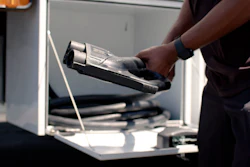
"It's not the same experience," adds Stahlbusch. "Think about charging a fleet vehicle closer to charging your cell phone than putting gas in your car."
Instead of filling up and leaving, electric vehicles can plug in whenever they're idle. Software determines when they actually draw power, how much, and for how long. That introduces a new layer of operational complexity—and also a new level of control.
 A pair of Chevrolet Silverado EV Work Trucks charging at PG&E's hub via ABB E-Mobility chargers.PG&E
[Related: Port Power brings fleet electrification to Oakland's Family Laundry]
The real bottleneck: energy
As electrified fleet deployments continue to scale, one constraint is becoming clear.
"The biggest trend is going to end up becoming energy management," Stahlbusch believes. "This will become the most important factor."
Stahlbusch and Doherty both stressed that it's not realistic—or economical—to build infrastructure and assume every charger runs at full power all the time. Why waste electricity for vehicles that do not immediately require charging or, at least, a full charge?
Instead, fleets and utilities are learning to manage power dynamically, something PGE&E is already doing.
"We're living through a period of historic load growth," Doherty said, pointing to electrification, reshoring, and data center demand all hitting the grid at once.
Grid workaround
That pressure is forcing new approaches.
One of them is PG&E's flexible service connection model, which allows fleets to deploy sooner even if grid capacity isn't fully built out.
"We can get [fleets] that full capacity now," Doherty said, "and build the long-term infrastructure over the next couple of years—if they agree to flex their usage when needed."
In other words, fleets don't have to wait years for perfect conditions. They just have to be flexible with existing infrastructure.
From load to asset
There's also a bigger shift underway: Utilities are starting to see electric fleets as more than just new demand.
"Our goal is to unleash the full potential of electric vehicles," Doherty explains. "Fleets will play a significant role as grid resources in the future."
That includes managed charging, vehicle-to-grid integration, and coordination with distributed energy resources. It's a move toward a more interactive grid—one where vehicles don't just consume energy, but help manage it.
Perception gap
Even as the technology matures, perception still remains a barrier.
"It's a lot of perception," Stahlbusch stresses. "It's less about how it actually works on the ground."
The industry is still working through skepticism, policy swings, and the fallout from an overheated EV market from 2020 until 2024.
At the same time, the fundamentals are getting stronger. Maintenance costs are lower. Operating costs are more predictable. Above all, the long-term business case is starting to stand on its own.
For many fleets, the hesitation now is less about feasibility—and more about confidence.
Leading by doing
PG&E's approach is to close that gap with proof. By electrifying its own fleet and building out charging infrastructure across its operations, the utility is effectively turning itself into a live test case.
"That experience helps us support customers," said Doherty. "We really look at everything through a customer lens—what do they get out of it?"
That includes cost, reliability, and support—but also transparency.
"It hasn't ever been perfectly smooth sailing, and it won't be."
The takeaway
Fleet electrification is no longer about proving the technology works, but rather about making it work consistently, at scale, and under real-world constraints.
That shift is already underway, and utilities like PG&E are helping define what comes next—not by avoiding the challenges, but by working through them in real time.
"I would say that now is the time [to begin fleet electrification]," Doherty said. "There's never been a better time than now. The early adopters have worked out a lot of the kinks."
That doesn't mean the transition is simple. It means the playbook is finally starting to take shape. For fleets still on the sidelines, the real question isn't whether electrification will happen. It's whether they're ready to deal with the complexity that comes with it.