













What you need to know:
- Rivian showcases next-gen autonomy and AI at first Autonomy & AI Day, highlighting in-house silicon and advanced vehicle software.
- Electric Delivery Van (EDV) excluded from new AI and autonomy tech, with focus on R2 and Gen 2 R1 passenger vehicles.
- Autonomy roadmap includes RAP1 processor, Gen 3 Autonomy Compute Module, LiDAR, and hands-free driving updates for future models.
- Rivian Unified Intelligence platform and Rivian Assistant set to launch in 2026, enhancing AI features across vehicles and services.
Last week, battery-electric vehicle manufacturer Rivian used its first-ever Autonomy & AI Day to showcase a major push toward in-house vehicle technology, highlighting new custom silicon, a revised software stack, and a long-term strategy for advanced driver AI assistance and autonomy.
Presented at the company's Palo Alto headquarters, the announcements confirmed Rivian's move to more tightly control the hardware and software that power its next generation of passenger vehicles.
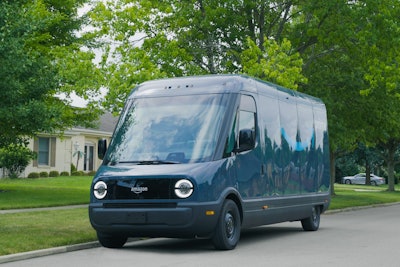
The automaker, however, did not specify whether those technologies would extend to its Electric Delivery Van fleet, which numbers nearly 14,000 vehicles currently operating in the U.S., the vast majority of them owned and run by Amazon.
In a statement to Clean Trucking, a Rivian spokesperson confirmed that "At this time we are focused on integrating these capabilities into our consumer fleet, including R2 and Gen 2 R1 [passenger vehicles]."
Rivian's next-gen autonomy and AI explained
The exclusion of next-generation autonomy tech and new AI-powered software architecture from the EDV, at least for the time being, is not surprising given that Rivian understandably wants to focus on upcoming passenger vehicles, which make up a bulk of the company's sales.
[Related: NHTSA opens investigation into 17,000 Rivian delivery vans over seat belt malfunction]
The new technologies are very impressive.
Rivian's autonomy roadmap centers on custom, in-house silicon and a new compute platform designed for vision-based AI. The first proprietary processor, RAP1, powers the OEM's third-generation Autonomy Compute Module and is built to scale performance through a low-latency interconnect and in-house AI software. The upcoming R2 mid-size SUV, due to arrive in the first half of 2026, will also add LiDAR to enhance sensing and redundancy, with the Gen 3 autonomy hardware now in validation and expected to launch starting in late 2026.
The company also outlined a software-led autonomy strategy built around its Rivian Autonomy Platform and a large-scale driving model trained on fleet data. Near-term updates will bring expanded hands-free driving to second-generation R1 vehicles, while a paid Autonomy+ subscription launches in early 2026. Autonomy capabilities will continue to advance across Gen 2 R1 and future R2 models toward higher levels of hands-off driving.
Lastly, Rivian confirmed it's extending AI beyond autonomy through its Rivian Unified Intelligence platform, which will support features ranging from predictive maintenance to service diagnostics. A key component to the effort is the Rivian Assistant, a new voice interface set to launch in early 2026 on Gen 1 and Gen 2 R1 vehicles.
The company said the tightly integrated AI architecture is designed to accelerate new features across the vehicle, service, and ownership experience.
Amazon's Rivian EDV success
In the U.S., nearly 14,000 Rivian EDVs are currently operating across the country. Amazon has also begun deploying the vans in Europe, with future expansion plans. Other major companies, including Ben & Jerry's ice cream, have also added Rivian EDVs to their fleets.
Amazon continues to be Rivian's biggest EDV customer, having received around 20,000 vehicles to date. The e-commerce giant has since launched the van in Europe with plans in place to increase their numbers.
[Related: Amazon rolls out Rivian Electric Delivery Vans in Canada for the first time]