









What you need to know:
- EPA to take action on Biden $5B Clean School Bus Program
- Lion Electric bankruptcy highlights EV school bus failures
- Biofuels, CNG, LNG, hydrogen added as fuel options for buses
- Oversight, compliance, fraud prevention strengthened for federal school bus grants
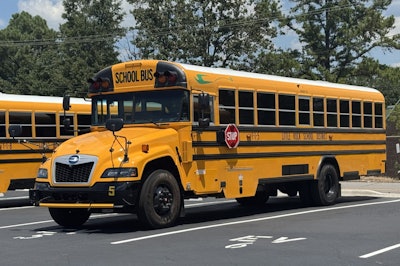
The EPA is poised to take action regarding the Biden administration's controversial $5 billion Clean School Bus (CSB) program.
According to The New York Post, the EPA will soon announce a series of changes to the CSB "with increased choice and affordable options for school buses. EPA's plans to set the program straight will strengthen oversight and compliance actions in a way that aligns with President Trump's Day One executive orders and ensure hard-earned American tax dollars are being put to the best use possible."
Agency officials are expected to announce that they will seek feedback from school administrators, fleet operators, manufacturers, and fuel producers on a range of options—including biofuels, compressed natural gas (CNG), liquefied natural gas (LNG), and hydrogen—that could power buses nationwide with a more reliable energy source.
The program changes do not mean that battery-electric buses are entirely excluded from future funding. However, recent experiences with some fully electric models—particularly those from Lion Electric—were problematic. The company filed for bankruptcy protection in late 2024 and soon after rebranded as LION.
[Related: School districts reveal technical, safety issues with Lion Electric EV buses]
"Today, EPA takes the next step to set the program straight," EPA Administrator Lee Zeldin said in a statement to The Post. "Americans can rest assured that moving forward, the program will be safe, effective, and use reliable forms of American energy. The regulatory process, which will begin with what's known as a Request for Information (RFI) from all those parties, aims to dole out the billions of dollars in grants for school bus fleets starting in 2026—while complying with the 2021 authorizing law, passed under President Joe Biden."
Around 90% of the program's funding went toward all-electric buses which, on paper and in theory, sounds good. However, "the EPA's watchdog determined in a 2023 audit that the program was rife with 'potential fraud, waste, and abuse'—and rescinded $38 million in ineligible rebates requested."
Lion Electric, for example, received $160 million in tax dollars and even opened a now-shuttered 900,000 sq. ft. manufacturing facility in Joliet, Illinois. Before and after the company's bankruptcy, several school districts reported technical issues, such as power steering failure, and were forced to ground these buses over safety concerns. Unfortunately, Lion was unable to fully repair most of the vehicles, leaving several school districts stuck with EV buses that were no longer road worthy.
[Related: Lion Electric EV school bus catches fire on way to school]
School district response
Troy Pitsch, Superintendent of Schools for USD 329-Wabaunsee in Kansas, which purchased four Lion Electric buses, is open to the EPA's changes.
"As a rural district that participated in the Clean School Bus Program, our focus has always been simple: safe, reliable transportation for students at a cost our community can sustain. The electric bus program provided districts like ours with an opportunity to explore new technology that we otherwise could not have afforded," he told Clean Trucking.
"At the same time, any large federal program... particularly one involving emerging technology... will come with operational learning curves. If EPA is now seeking broader fuel flexibility and improved oversight, that conversation is worth having. School districts need options that reflect climate conditions, route length, infrastructure capacity, and long-term maintenance realities. One size does not fit all. What matters most is that federal transportation dollars ultimately help districts put dependable buses on the road and students in seats safely and on time. We welcome practical solutions that prioritize reliability, fiscal responsibility, and local flexibility."
Money spent, poor oversight
Unfortunately, and despite the previous administration's good intentions, the CSB program was plagued with errors.
Per the Washington Free Beacon:
"At least $2.7 billion in funding was awarded to 1,152 school districts to make the change to 8,236 electric buses—but dozens were stalled by manufacturing issues."
Additionally, The Post reports the following:
"More than $61 million went toward just two entities in New York City making 180 all-electric buses for five school districts, coming out to roughly between $295,000 and $395,000 for each one. It's unclear how many were produced. 'Statewide in New York, school districts got $210 million from the program and manufactured just 150 buses,' said a spokesperson from the New York State Energy Research and Development Authority. "That puts a price tag on the electric bus swap at approximately $318,452.45 per vehicle to produce."
Although the program, in its previous form, did not function as intended, the updates offer renewed hope to some districts.
"One size does not fit all," Pitsch stressed. "What matters most is that federal transportation dollars ultimately help districts put dependable buses on the road and students in seats safely and on time. We welcome practical solutions that prioritize reliability, fiscal responsibility, and local flexibility."