













What you need to know:
- Clean Energy Expands Nationwide RNG Fueling Agreements across trucking, waste, and transit fleets.
- 2.1M-Gallon RNG Deal Powers 150-Truck Fleet in major Western U.S. markets.
- RNG Infrastructure Growth Supports 8,000+ Refuse and Transit Vehicles across North America.
- Renewable Natural Gas Gains Traction as Low-Carbon, Cost-Effective Diesel Alternative.
Clean Energy has announced that it's expanding its footprint in the alternative fuel market with a new round of agreements across the country.
The contracts, signed with trucking, waste management, and public transit fleets, cover both renewable natural gas (RNG) supply and fueling infrastructure development.
[Related: Nearly 200 groups urge Congress to approve clean fuel tax credits for fleet operators]
The Newport Beach, California-based company says it has renewed and expanded its agreement with Ecology Transportation Services, a major RNG trucking operator in Southern California. Under the new deal, Ecology's fleet of 150 RNG-powered trucks will receive approximately 2.1 million gallons of RNG each year, fueling at Clean Energy stations throughout California, Arizona, and Nevada.
"2025 was a rough year for other alternatives that didn't live up to the hype. But fleets continue to seek proven solutions to meet sustainability targets and they’re finding that the RNG metrics deliver on multiple fronts—it's clean, affordable, has diesel-like capability, is domestically produced, and there is a robust fueling infrastructure already in place," said Chad Lindholm, senior vice president at Clean Energy.
Recology, a longtime partner of Clean Energy, and one of the largest waste haulers in the western U.S., is boosting its investment in renewable natural gas with enhancements to its existing fueling station in Seattle and the completion of a new facility in Snohomish, Washington. Clean Energy will oversee operations and maintenance at both locations, supporting Recology’s continued expansion across the greater Seattle area.
Meanwhile, Clean Energy is advancing its ongoing collaboration with WM, delivering operations and maintenance services at more than 85 RNG fueling stations throughout the U.S. and Canada, retaining approximately 8,000 of WM's RNG-powered refuse trucks in service.
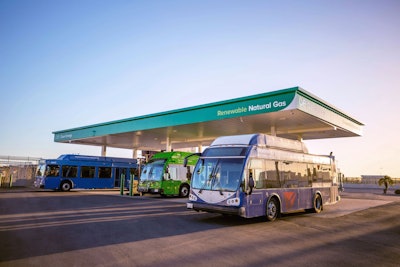
Elsewhere in the U.S., Washington Metropolitan Area Transit Authority has renewed its contract with Clean Energy to operate and maintain fueling infrastructure for more than 400 natural gas buses in the D.C. area. The agreement covers roughly 5 million gallons of fuel, extending a partnership that has spanned more than a decade and now includes two newly commissioned stations.
In Arizona, the company recently signed a maintenance deal with ABM Facility Services to service three City of Phoenix transit fueling stations supplying RNG to 335 buses, dispensing about 4.7 million gallons annually.
[Related: Renewable natural gas best diesel replacement, experts say]
Clean Energy will also supply approximately 750,000 gallons of RNG annually to 78 buses operated by Arlington Transit in Virginia. The City of Scottsdale extended its maintenance agreement with Clean Energy to support 49 garbage trucks using about 441,000 gallons of fuel annually, while Nashville International Airport renewed a contract covering 63 shuttle buses and fleet vehicles consuming roughly 350,000 gallons per year.
In Arkansas, the City of Fort Smith also signed an RNG supply deal for its garbage truck fleet. Clean Energy built and continues to service the city's fueling station, which opened in 2021.
The expansion comes as policymakers focus on cutting emissions from agriculture and transportation—two sectors that together account for a significant share of U.S. greenhouse gases, according to the EPA. By capturing methane from organic waste and converting it into vehicle fuel, RNG can deliver lifecycle emissions reductions compared with diesel while often remaining price-competitive.
"These new agreements that we're announcing today reflect that growing recognition across diverse fleet applications," Lindholm concluded.