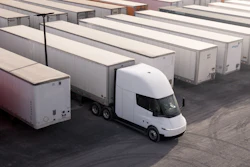














The era of diesel dominance in the heavy-duty trucking industry is nearing its end as battery-electric vehicles (BEVs) are projected to become the most cost-effective option across all major shipping routes by 2035, according to a new report released by the North American Council for Freight Efficiency (NACFE).
Providing a decade-long financial roadmap for Class 8 trucks and evaluating the total cost of ownership (TCO) for diesel, natural gas, electric, and hydrogen fuel cell powertrains, NACFE's latest report, Forecasting the TCO of Powertrain Alternatives: The Messy Middle, suggests that while the industry is currently navigating a complex transition, BEVs are positioned to become the most economical choice for nearly all heavy-duty applications within the next decade.
The shift to electric
Researchers found that by 2035, BEVs will achieve the lowest net TCO across all modeled duty cycles. This shift is expected to be driven by a projected 45% drop in vehicle purchase prices and superior energy efficiency compared to internal combustion engines.
"BEVs move from being one of the more expensive options in 2025 to becoming the definitive market leader in regional cycles by 2035," the report states.
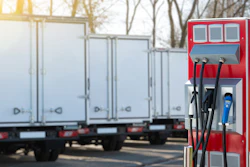
Regional return-to-base (RTB) and drayage cycles offer the strongest immediate case for electrification, benefiting from high-mileage routes and predictable depot charging.
![F5 F90 D19 Fde4 45 Db A563 E8 F95 Bc55 Fe2[72]](https://img.cleantrucking.com/mindful/rr/workspaces/default/uploads/2026/04/f5f90d19-fde4-45db-a563-e8f95bc55fe272.PiSGO42SLn.png?auto=format%2Ccompress&dpr=2&fit=max&q=70&w=700)
Rising diesel costs
Conversely, the report highlights an "escalator" of rising costs for legacy diesel vehicles steadily eroding their long-term advantage, noted the report's lead author and NACFE's emerging technologies consultant, Emilia Sibley.
Get 80 tips to boost your fuel efficiency
While fuel costs per mile may drop slightly, overall ownership costs are expected to rise due to increasingly stringent emissions regulations, higher maintenance requirements for aging internal combustion technology, and rising insurance premiums and regulatory penalties.
Bridges and niche markets
For fleets not yet ready for full electrification, compressed and renewable natural gas (CNG/RNG) serve as a "stable middle ground," Sibley said. By avoiding the insurance and maintenance escalators projected for diesel in 2035, Sibley said CNG serves as a viable near-term hedge against diesel’s rising operational costs without the intense infrastructure requirements of zero-emission alternatives.
However, the report forecasts natural gas will eventually be overtaken by the aggressive cost-reduction curve of BEVs by 2035.
Hydrogen fuel cell vehicles (FCEVs) are projected to remain the most expensive option through 2035, even with hydrogen vehicle and fuel costs projected to drop significantly over the next decade. However, the report notes FCEVs may find a niche in heavy-haul, long-distance routes where rapid fueling and maximum payload are critical.
Bespoke reality
NACFE Executive Director Mike Roeth emphasized that there is no universal date for when alternative fuels reach parity with diesel. Instead, parity is described as an "operational window" determined by a fleet's specific geography, duty cycles, and local utility rates. Furthermore, Roeth emphasized that there is no universally accepted TCO figure, and each fleet's approach to alternative fuel solutions has to be specific to its duty cycle.
The analysis notably assumed zero government incentives, providing a "worst-case scenario" for when alternative powertrains become more affordable through organic technology improvements alone.
The report utilized real-world data from NACFE’s "Run on Less" demonstrations, which feature North American fleets moving actual freight to test emerging technologies.