













What you need to know:
- Tesla targets Tesla Semi mass production in 2026 but scaling the Nevada plant toward electric truck manufacturing capacity remains a key challenge
- Early EV truck output in 2026 will increase gradually before accelerating into 2027 highlighting potential production ramp delays
- The planned Tesla Megacharger network remains early stage with about 46 stations targeted by 2027 raising concerns about electric truck charging infrastructure readiness
- The Megacharger deployment map shows strong concentration in Texas and California first followed by phased expansion across major freight corridors and logistics states
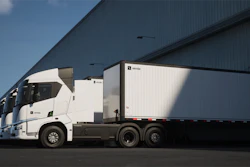
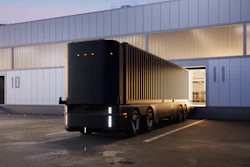
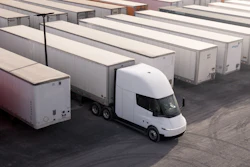
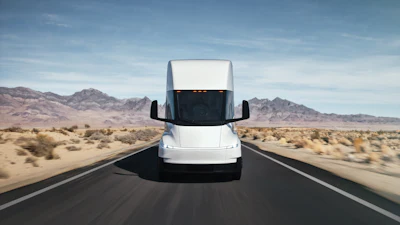
Tesla is moving closer to large-scale production of its long-awaited battery-electric truck, the Tesla Semi.
The company has officially confirmed in its just-released Q1 2026 report that mass production of the Semi remains on track to begin this year. Preparations are currently underway at the recently completed and dedicated manufacturing facility near Gigafactory Nevada, where production lines are being readied for full-scale operations.
[Related: Tesla Semi final specifications confirmed by Tesla]
Recent reports suggest that Tesla expects to initiate its first "online builds"—a term referring to serial production—in the first half of 2026. The company is planning a substantial ramp-up in output during the latter half of the year, indicating confidence in both demand and manufacturing readiness.
During Tesla's Q1 earnings call, Musk stated that the company will "begin production of our semi-truck soon," while noting that manufacturing will scale gradually at first before picking up pace later in the year and continuing into 2027.
The Nevada facility has been designed with an ambitious annual production capacity of up to 50,000 trucks. If achieved, this would position Tesla as a major player in the heavy-duty trucking market, competing with both traditional diesel legacy manufacturers and emerging electric rivals.
[Related: First look inside Tesla's factory building the Tesla Semi]
Megacharger network status
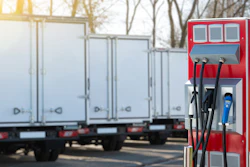
In parallel with production efforts, Tesla is also building out the infrastructure needed to support its electric fleet. The company has begun deploying its high-powered Megacharger network, tailored specifically for the Semi. The first public Megacharging site has already been established in Southern California, marking an early step toward a broader nationwide rollout.
As Tesla accelerates both manufacturing and infrastructure development, the coming year is expected to be pivotal in determining the success of the Semi and its impact on the freight industry.
Earlier this year, Tesla released a nationwide overview of both existing and planned Megacharger locations, extending beyond California to cover the broader U.S. network.
Looking more closely at the rollout map, Texas currently stands out with 19 proposed sites—the largest number in any state—while California trails closely with 17 projects underway. The distribution suggests a strategy focused on key freight-heavy regions rather than a single concentrated area.
Outside of Texas and California, the next wave of expansion is starting to take shape across other regions. Florida, Georgia, Illinois, and Washington are each expected to host four Megacharger locations, while New York and Nevada are set to receive two sites each.
Tesla's broader roadmap also includes Arizona, Colorado, Utah, Oregon, Indiana, Pennsylvania, and Maryland, with one planned Megacharger installation in each of those states.
At last year's Advanced Clean Transportation (ACT) Expo, Tesla Semi Program Manager Dan Priestley also detailed the company's wider charging strategy. He explained that Tesla plans to develop a public Megacharger network of roughly 46 stations by 2027 to accommodate a growing fleet of electric trucks. Based on current progress, the rollout appears to be moving in line with that goal.