













What you need to know:
- Tesla launches first public Tesla Semi Megacharger in Ontario, California with 750 kW fast charging for electric semi-trucks.
- Strategic Inland Empire freight hub location near I-10 and I-15 supports Port of Los Angeles logistics routes.
- Tesla Megacharger network expansion led by Texas and California along key Interstate freight corridors.
- Megawatt charging (1.2 MW) enables Tesla Semi to gain around 400 miles in 30 minutes as Tesla targets 46 stations by 2027.
Tesla promised 2026 would be the year of the Semi and, so far, that goal appears to remain on schedule.
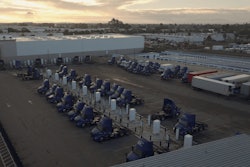
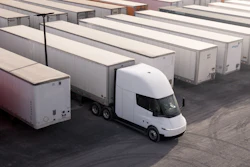
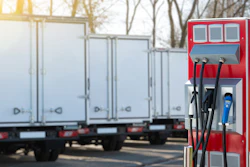
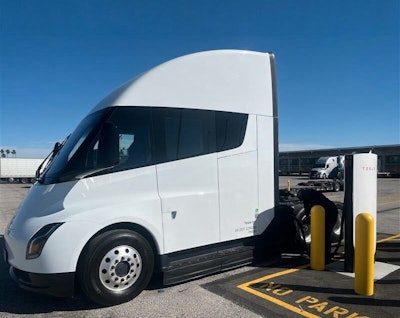
Tesla has launched its first public Megacharger station for the Tesla Semi in Los Angeles, marking a new step in supporting its electric trucking network. The site delivers charging speeds of up to 750 kW and is currently available to Tesla Semi customers.
The Tesla Semi team shared the news on X, confirming that the Megacharger station located at 4265 E Guasti Road in Ontario, California is now operational and accessible to Semi customers.
As is the case with Tesla's Superchargers, the site was selected with logistics in mind.
Ontario is located in the Inland Empire, one of the world's busiest freight hubs, close to the junction of the I-10 and I-15 freeways. Its location makes it an important charging point for battery-electric trucks transporting goods between the vital Ports of Los Angeles and Long Beach as well as distribution centers more inland.
Megacharger network plans
Only a few weeks ago did Tesla unveil nationwide maps showcasing current and future Megacharger sites not only in California but for the rest of the U.S.
A closer look at the Megacharger deployment map shows Texas leading the expansion with 19 planned sites, the highest of any state so far. California follows with 17 locations in development, highlighting a rollout that is being distributed across several major freight regions.
Two interstate corridors appear especially central to the initial buildout.
Interstate 5 runs the length of the U.S. West Coast, connecting major ports and logistics centers from Southern California through the Pacific Northwest. Interstate 10, meanwhile, acts as a key east–west freight route, carrying cargo from the West Coast across the Southwest and into Texas.
These routes are already familiar territory for early Tesla Semi deployments. Fleets operated by companies such as PepsiCo have been running the electric trucks along similar logistics corridors.
Beyond Texas and California, several other states are beginning to emerge in the next phase of expansion. Florida, Georgia, Illinois, and Washington each have four Megacharger sites planned. New York and Nevada are slated for two locations apiece.
Additional states on Tesla's roadmap include Arizona, Colorado, Utah, Oregon, Indiana, Pennsylvania, and Maryland, with one upcoming Megacharger site planned in each.
Megachargers: explained
Megachargers are Tesla's specialized high-power DC fast chargers designed specifically for the Tesla Semi. Unlike standard EV chargers, these systems are built to handle extremely large battery packs and heavy-duty commercial use.
Each Megacharger is engineered to deliver more than one megawatt of power, with peak output reaching roughly 1.2 MW. At those levels, a Tesla Semi can regain around 400 miles of driving range in about 30 minutes, helping reduce charging downtime for freight operations.
At last year's Advanced Clean Transportation (ACT) Expo, Tesla Semi Program Manager Dan Priestley also outlined the company's broader charging plans. He said Tesla intends to build a public Megacharger network with about 46 stations by 2027 to support the growing electric truck fleet. So far, it appears the company is on track to make this happen.
[Related: Tesla Semi public charging network coming in 2027]
Priestley added that Tesla Semis have already accumulated about 7.9 million miles of driving in real-world operations, though the company has not disclosed how many vehicles make up the fleet. He also noted that Tesla's dedicated Semi manufacturing facility in Nevada is nearing completion and is expected to begin scaling production this year, with a long-term goal of producing around 50,000 trucks annually.
[Related: Tesla announces major Semi factory progress]