













What you need to know:
- Electric Bus Management with BetterFleet helps Mountain Line charge buses efficiently and keep them ready for service
- Utility Planning encourages working with local utilities early and using smart modeling to know actual energy needs
- Smart Charging and Reliability use dynamic schedules and load management to prevent spikes and ensure buses are available
- Microgrid and Energy Integration supports solar, battery, and microgrid use while planning for long-term fleet electrification
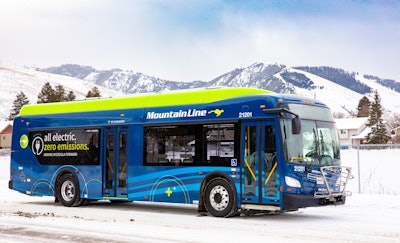
As transit agencies move from pilots to large-scale electrification, managing battery-electric bus fleets has become as much an operational challenge as an infrastructure one. To address this, Mountain Line, Missoula, Montana's zero-fare, community bus service, has selected BetterFleet to deploy a charge management and fleet operations platform designed to optimize energy usage, coordinate charging, and ensure the buses are always prepared for daily service.
To prepare for the switch from fossil fuel-powered to battery-electric buses, transit agencies should begin working with local utilities early. "Utility interconnection and capacity upgrades can take 12 to 36 months depending on the jurisdiction," explains Daniel Hilson, CEO of BetterFleet, noting that agencies waiting until charger installation may already be behind.
[Related: What it takes to install charging infrastructure]
Speaking to Clean Trucking, Hilson points out that a common mistake is treating the utility relationship as "a one-time infrastructure transaction rather than an ongoing operational partnership," while planning around overly conservative assumptions such as every charger running at full power simultaneously.
"When you do proper fleet modeling and have intelligent charge management in place, you can go back to the utility with a much more accurate picture of demand," he said, adding that it provides agencies with "a clear, credible basis for discussing the capacity your sites will actually require."
High-electrification operations
Since launching its first battery-electric buses in 2019, Mountain Line has grown into a major player in zero-emission transit. Nearly 90 percent of its regional fleet is electric, and all future bus procurements will be zero-emission as the system moves toward full fleet electrification by 2035.
"Mountain Line is a progressive transit agency that continues to set a strong example for how zero-emission fleets can be deployed thoughtfully and effectively," Hilson said. "Electrification can be done well even in places with extreme weather conditions when the operational systems behind it are designed for transit."
Smart charging
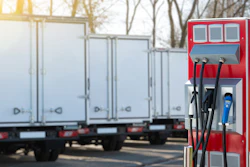
BetterFleet's platform dynamically schedules charging based on plug-in times, required energy, and pull-out schedules. Time-of-use optimization shifts charging to off-peak periods while prioritizing buses with the earliest departures or greatest energy deficits. Automated load management monitors site demand and grid capacity in real time, reducing costly spikes and maintaining operational reliability.
"Without smart charge management, fleets can create sharp demand spikes when multiple buses plug in after service," Hilson said. "A well-designed EV fleet management platform shifts and staggers that load automatically, keeping demand within defined limits, directly reducing demand charges and minimizing infrastructure upgrades."
[Related: InductEV, BetterFleet expanding wireless fleet charging]
Hilson emphasizes that energy savings must never compromise service: "A charge management system built for transit needs to keep vehicle availability as its highest priority. If it's staggering or shifting load, it should do so intelligently, prioritizing the vehicles with the greatest energy deficit and the earliest pull-out times—not just distributing power evenly. An electric bus that isn't ready for service is an operational failure, regardless of how well the energy bill looks."
Resilient infrastructure
The deployment includes BetterFleet's on-site controller, providing local control at depots and allowing charging to continue even during network interruptions. Additional chargers can be integrated without major system changes, enhancing operational resilience.
Microgrid integration
Mountain Line is also planning a microgrid with solar, geothermal, and battery storage. "The first consideration is having a good model for understanding the true impact of these technologies against your specific objectives," Hilson said. "Are the objectives cost control? Risk management if the grid has an issue? Technology demonstration?"
He added that goals directly shape modeling. "BetterFleet Plan is our module for looking at the impact of different combinations of behind-the-meter generation and storage, and can be used to understand what is possible in combination with smart charging." Once deployed, the system can integrate with microgrid controllers or battery storage to ensure that "the same modeled strategy is actually implemented and operating as intended," aligning transit charging with on-site energy resources from day one.
Fleet software
As electric bus adoption accelerates, agencies increasingly recognize that infrastructure alone isn't enough. Fleet modeling and charge management platforms are now essential for managing energy demand, coordinating vehicle readiness, and planning long-term electrification.
BetterFleet has deployed similar systems across North America, including the Toronto Transit Commission, the Metropolitan Water District of Southern California, Helix Water District, and the City of Roseville, as well as international operators such as Go-Ahead London and Transit Systems in Sydney.
Projects like Mountain Line's highlight how operational software is becoming essential to scaling electric transit fleets while maintaining reliability and controlling energy costs.