













What you need to know:
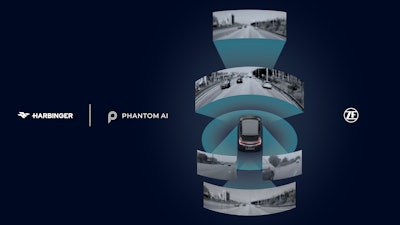
- Harbinger acquires Phantom AI to boost autonomous driving and ADAS in its medium-duty electric and hybrid trucks.
- ZF licensing deal brings Phantom AI's computer vision to passenger car ADAS, creating a new software revenue stream.
- Advanced driver-assistance features like AEB, adaptive cruise, and lane-keeping roll out to meet fleet safety demand.
- Harbinger Industria battery division expands the company into EV technology, autonomy, and energy storage.
Harbinger is showing no signs of slowing down as we're wrapping up the second month of 2026.
The Garden Grove, California-based manufacturer of medium-duty battery-electric and hybrid commercial vehicles today announced it has acquired Phantom AI, an autonomous driving company. Alongside this acquisition, Harbinger has struck a separate commercial agreement with ZF Group's passenger car ADAS division to license Phantom AI's computer vision platform for use in its light-vehicle advanced driver assistance portfolio.
[Related: Harbinger raises $160M co-led by FedEx, plans more 2025 EV deliveries]
Together, the Phantom AI acquisition and the ZF licensing arrangement position Harbinger to generate a new high-margin software and services revenue stream beyond vehicle manufacturing.
Beginning sometime this year, Harbinger will begin deploying Phantom AI's vision-based technology across its medium-duty electric and hybrid truck lineup, enabling features such as automatic emergency braking, adaptive cruise control, lane-keeping assist, and additional active safety functions. The rollout is designed to address growing fleet demand for advanced safety systems—capabilities that have historically been limited or unavailable in the medium-duty commercial vehicle segment.
 Phantom AI prioritized affordable Level 2 features like automatic emergency braking and lane support to improve everyday safety before advancing to higher levels of autonomy.Phantom AI
Phantom AI initially concentrated on practical, affordable Level 2 driver-assistance systems designed to ease daily driving and improve road safety. Its strategy prioritized broad deployment of features like automatic emergency braking and lane support before advancing toward higher levels of autonomy.
[Related: Panasonic is now Harbinger's official battery supplier]
Harbinger finalized the acquisition in November 2025. The company's 30-person team will remain based in Mountain View.
Software as the next driver
Harbinger CEO and Co-Founder John Harris told Clean Trucking that the company's push into software is expected to start modestly but could become far more meaningful over the next several years.
"In the near term, we anticipate our software licensing revenue to be in the millions, which is not material when compared to our chassis revenue. The bigger long-term opportunity, however, is in licensing the ADAS technology to ZF. The passenger car market volumes are very, very large, so we expect this to become material revenue in 2027–2028 as passenger car volumes ramp."
While the agreement opens the door to new end markets, the company emphasized it is not planning to enter passenger vehicle manufacturing directly. "We are focused on our core business of manufacturing electric and hybrid medium-duty truck chassis and related hardware solutions for commercial customers," Harris continued. "The expansion comes from the software side. Our acquisition of Phantom AI, and licensing its ADAS technology to companies like ZF, gives us the ability to participate in passenger vehicle markets indirectly through software partnerships. The strategy is about broadening our reach through scalable software licensing relationships, not entering the passenger vehicle manufacturing business."
Harris also addressed why medium-duty fleets have historically lagged in adopting advanced driver-assistance systems.
"Large OEMs have concentrated their ADAS investments on passenger vehicles and heavy-duty trucks, where volumes are significantly higher and the return on engineering spend is clearer. Medium-duty is a smaller segment by comparison so it hasn't received the same level of attention or investment, and many vehicles on the road today still lack relatively mature safety technologies. We designed our platform from the ground up with cost efficiency in mind and are already delivering products that improve total cost of ownership for fleets. Integrating ADAS builds on that foundation by adding meaningful safety and operational value without fundamentally changing the economics. Now that we've acquired Phantom AI, we also control the underlying technology. That vertical integration allows us to incorporate these features directly into our platform without layering on third-party supplier margins, making it practical to bring advanced safety capabilities to medium-duty fleets that historically were reserved for higher-volume segments."
Harbinger's busy year
Earlier this year, Harbinger unveiled a new standalone battery division, Harbinger Industria, which will market its battery systems directly to customers for energy storage and auxiliary power uses.