













What you need to know:
- REE Automotive financial results 2025 reflect a shift to a software-defined vehicle business model, moving away from manufacturing toward electric commercial vehicle software and IP development
- The company implemented major cost reductions and restructuring, including a 40% workforce cut, lower R&D and SG&A expenses, and reduced supplier commitments to improve cash preservation
- Despite pausing production of the REE P7 chassis cab, REE maintained partnerships such as with Mitsubishi Fuso Truck and Bus Corporation, supporting its software-defined EV platform strategy
- Financial performance improved with reduced GAAP and non-GAAP losses and lower cash burn, while the company explores strategic alternatives to enhance shareholder value
It's been a few months since REE Automotive last provided an update on its financial status, following its January announcement that Nasdaq had granted the company a second 180-day extension to regain compliance with the $1 minimum bid price requirement.
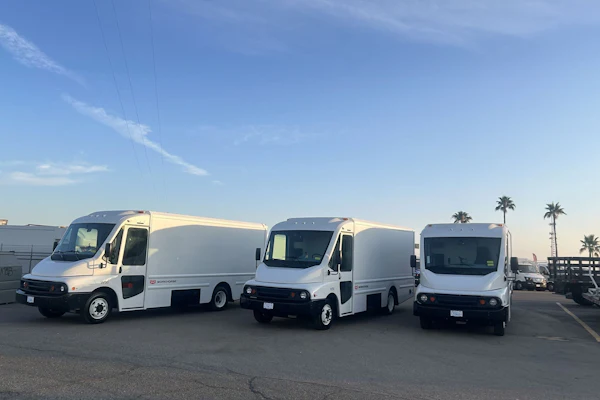
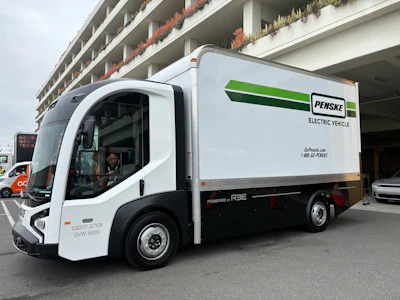
Earlier this month, the Tel Aviv-based manufacturer of the battery-electric, software-defined Class 4 P7 Chassis Cab reported its fiscal year 2025 results which, interestingly, reflect a major transition toward a software-led business model and away from vehicle production, alongside significant cost reductions and a continued focus on preserving liquidity.
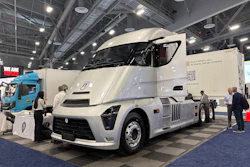
[Related: Step inside the REE P7-C at the 2025 ACT Expo]
During 2025, REE paused production and reorganized its operations to focus on software-defined vehicle technology and intellectual property. As part of this shift, the company reduced its workforce by about 40%, lowering ongoing expenses in engineering and corporate functions.
These actions reduced annual payroll costs by approximately $2.6 million in research and development and $2.7 million in administrative and selling expenses. The company also incurred about $2.1 million in one-time restructuring costs related to layoffs.
REE further reduced its supplier commitments tied to production programs from about $42 million to roughly $13 million, thus significantly lowering future financial obligations.
Despite the production pause, REE continued working with industry partners, including Mitsubishi Fuso Truck and Bus Corporation, as it advances its software-defined vehicle platform and explores commercial opportunities in the sector.
The company ended 2025 with $14.2 million in cash and cash equivalents, down from $54.3 million at the end of 2024. By May 2026, cash had declined to $4.9 million.
Free cash flow burn was $75.0 million, a slight improvement from $76.5 million in 2024, reflecting cost savings offset by earlier production expenses and reduced government support. Net losses also improved. GAAP net loss fell about 50% to $55.8 million, while non-GAAP net loss declined 18% to $57.7 million, driven mainly by cost reductions and accounting adjustments.
REE says it has begun reviewing strategic alternatives with advisors to explore options that could maximize shareholder value. For now, management said it remains focused on preserving cash while evaluating partnerships or other strategic paths.
The company continues to position its technology and intellectual property as core long-term assets as it transitions toward a software-first model.
"We continue to believe that REE's technology, engineering capabilities and intellectual property portfolio represent meaningful strategic value, and we remain focused on evaluating strategic alternatives and opportunities for the business," said Daniel Barel, REE's CEO and co-founder.