














What you need to know:
- Toyota hydrogen trucking ecosystem expansion is underway as Toyota and Hyroad Energy deploy 40 hydrogen fuel cell Class 8 trucks in Southern California, integrating hydrogen infrastructure, fleet software, and fueling operations into one system
- Hyroad's Nikola fleet rebuild is underway as the company transforms 117 acquired Nikola fuel cell trucks (FCEVs) into an operational hydrogen freight fleet, restoring software, cybersecurity, and telematics
- Hydrogen fueling and software integration is advancing through expanded hydrogen refueling infrastructure and mobile fueling in California, alongside fleet scheduling and logistics software systems
- Hydrogen trucking and performance focus centers on improving total cost of ownership (TCO), uptime, and throughput to compete with diesel
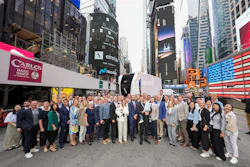
At ACT Expo 2026 in Las Vegas, the hydrogen trucking sector took another step toward commercialization as the industry continues to adjust to policy changes introduced during the second Trump administration.
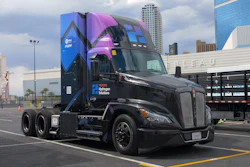
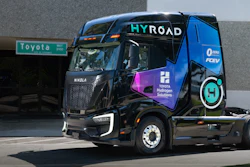
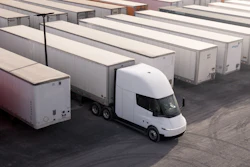
Toyota Motor North America announced at the show an agreement with Austin, Texas-based Hyroad Energy to deploy 40 hydrogen fuel cell Class 8 trucks across Southern California. The initiative combines vehicles, fueling infrastructure, and digital fleet services into a single operational model.
This announcement also reflects a broader shift within the hydrogen sector, moving beyond isolated fueling pilots and toward integrated ecosystem development. As companies increasingly focus on deployment rather than demonstration, the Toyota-Hyroad agreement offers a tangible example of how the industry is beginning to operationalize hydrogen freight at scale.
Rather than focusing solely on vehicle deployment, the agreement is designed to connect three interdependent systems: Toyota's hydrogen production and infrastructure, Hyroad's fleet operations and software platform, and a shared logistics model centered on heavy-duty freight.
"We help with the trucks, we help with refueling, we help with the supply, we help with funding programs," said Hyroad Chief Technology Officer Aaron Lapsley.
[Related: After Nikola's fall, Hyroad Energy rises in hydrogen trucking]
Nikola assets become the foundation
Hyroad's role in the partnership is closely tied to its origins. In August 2025, the company acquired 117 Nikola fuel cell electric trucks (FCEVs), along with spare parts, software platforms, and intellectual property, from the bankruptcy estate of Nikola Motors.
[Related: Over $114M worth of Nikola hydrogen trucks, raw materials up for auction]
Speaking to Clean Trucking, Lapsley confirmed that 10 of those trucks had previously served as Nikola loaner or demonstration vehicles. Hyroad later acquired an additional three FCEVs and one battery-electric truck to expand its inventory of replacement parts.
Above all, the acquisition became the cornerstone of Hyroad's operational strategy. As Lapsley explained, "We purchased at the auction 103 of these brand new units, and they were the factory state of production trucks."
Acquiring the assets, however, was only the first step.
Turning a collection of idle vehicles into a functioning commercial fleet required far more than refurbishment. Hyroad, Lapsley revealed, needed to restore operational continuity, rebuild critical software and telemetry systems, and establish the support infrastructure necessary to keep those trucks running after a lengthy period of inactivity following Nikola's collapse.
Rebuilding the operational stack
Much of Hyroad's early effort focused on reviving systems that had effectively gone dormant during the transition from Nikola's bankruptcy.
According to Lapsley, "The big thing we had to do, because we purchased this stuff and so much of it had been offline, was getting everything back online. There's just a whole bunch of cloud software plumbing that had to be done where there was around a six month gap."
Once those foundational systems were restored, the company shifted its attention to improving vehicle performance and reliability using real-world operating data. That work included refinements to fuel cell calibration.
"We've done a couple of things to adjust calibration settings for a piece of equipment in the fuel cell power module to make it run better and increase reliability of certain components."
Even mechanical stress points required additional engineering attention. Brake resistor performance under sustained downhill loads became one area of focus, leading Hyroad to develop its own maintenance procedures rather than relying solely on legacy production methods.
Cybersecurity infrastructure also had to be rebuilt from scratch.
As Lapsley noted, despite the Nikola team leaving behind a "really well-packaged OTA version update that is actually the one that we're bringing most trucks up-to- date with now... there were a couple of things that were lost related to cybersecurity. Not that the trucks became insecure, but the system that was set up was taken offline for security. And so we've had to rebuild that, which is tremendously technically complex."
Toyota expands hydrogen supply
On the infrastructure side, Toyota is extending its hydrogen strategy beyond vehicle development and into fueling operations.
[Related: Despite Trump-era policies, hydrogen industry regroups and bets on heavy-duty growth]
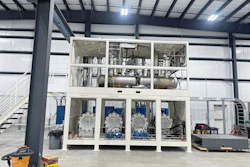
The company will supply hydrogen through its growing refueling network in Ontario, California, while coordinating with Hyroad on mobile fueling solutions intended to address near-term supply constraints across Southern California.
Lapsley described the short-term approach:
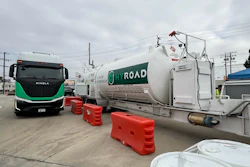
"Toyota is like us. Hyroad has short-term and long-term plans for refueling. So they are deploying, last time we heard, two liquid mobile refuelers. Hyroad is, at the moment, working to deploy one of that same type of unit. So there will be three of them."
The strategy reflects the realities of early hydrogen adoption. While permanent fueling infrastructure continues to expand, mobile refuelers can provide interim support to help fleets maintain operations.
[Related: Nikola's collapse brings headaches, financial problems for fleets]
Software as infrastructure
Beyond fueling hardware, Hyroad is also developing software systems designed to manage demand and reduce congestion at limited fueling locations. The challenge lies in balancing operational efficiency with driver flexibility.
As Lapsley explained, "there's a trade-off... between the flexibility for drivers to do whatever they want, basically, and show up whenever, and then needing to have a really rigid scheduling system."
As hydrogen networks grow, scheduling and coordination software may become just as important as physical infrastructure, effectively transforming hydrogen refueling into a managed, software-driven logistics process.
Building a multi-OEM hydrogen platform
One of the more significant implications of the Toyota-Hyroad agreement is its potential to support fleets that extend beyond a single manufacturer ecosystem.
While Hyroad's platform was originally designed around Nikola vehicles, the company is increasingly adapting its architecture for broader fleet applications.
"The Nikola platform, which was designed to be integrated with Nikola trucks, can be used for really any vehicle telemetry," Lapsley said. "It's certainly possible. But if you're retrofitting something else, you're never going to get the same depth and breadth of integration."
That flexibility could prove important as Toyota's hydrogen trucks begin operating alongside legacy equipment and vehicles from other manufacturers.
Throughput, uptime, and total cost of ownership
A central objective of the partnership is achieving economic competitiveness with diesel-powered trucking. According to Lapsley, total cost of ownership (TCO) success depends less on theoretical fuel efficiency and more on maximizing operational uptime.
"Uptime and throughput matter tremendously to the efficiency of hydrogen and the price. We need the fuel to be running, running at maximum throughput for as long a period of time and with as minimal downtime as possible."
Those operational metrics extend beyond the trucks themselves. Station utilization, hydrogen losses, and refueling speed all influence the overall cost per mile.
Vehicle performance remains an important factor as well.
Describing the drivetrain's behavior under load, Lapsley said, "These trucks do quite well on hills because the fuel cell provides part of the power stack and then the battery starts discharging to top it up. It's almost like a Formula One car."
Toyota's long-term hydrogen strategy
Toyota's involvement in the partnership builds on more than three decades of fuel cell development. Over time, the automaker has expanded its hydrogen focus from the Mirai passenger vehicle to heavy-duty transportation applications.
A Class 8 fuel cell truck can carry up to 70 kilograms of hydrogen—roughly equivalent to the fuel capacity of about a dozen Mirais—and can refuel in 15 to 20 minutes while achieving up to 500 miles of range per fill.
For Toyota, heavy-duty freight presents a significant opportunity to scale hydrogen infrastructure, as high utilization rates can help justify the substantial investment required to build fueling networks.
Ecosystem integration
At the heart of the Toyota-Hyroad model is the integration of three previously fragmented elements: trucks, fueling, and digital operations.
Hyroad CEO Dmitry Serov stated earlier this year that “When fueling, vehicles, software and operational commitment all come together, hydrogen trucking works.”
That view is shared by Toyota Hydrogen Solutions leadership, which emphasized collaboration as a prerequisite for scaling the hydrogen economy.
"Accelerating the hydrogen economy requires collaboration, and Toyota is proud to work with Hyroad to move the heavy-duty sector forward."
Southern California as a proving ground
The partnership's immediate focus is Southern California, a region where infrastructure limitations have historically constrained hydrogen fleet utilization.
Hyroad is also working to reconnect with smaller fleet operators that own one to three hydrogen trucks and have struggled with inconsistent fueling availability and high prices.
Discussing the near-term outlook, Lapsley said that "we are very aware that the fueling situation in SoCal has been a bottleneck and expensive. That situation is starting to change. Within the next month or two, that is going to look like a very different situation with some positive momentum."
The prospect is encouraging for Nikola Tre owner-operator Bill Hall of Oakland, California-based Coyote Container. Hall was forced to sideline his Nikola nearly a year ago because affordable hydrogen fuel was difficult to obtain. He believes the Toyota-Hyroad partnership could help address some of the infrastructure and cost challenges that have hindered hydrogen trucking in the region.
[Related: Nikola's collapse brings headaches, financial problems for fleets]
"Hopefully Toyota can help build out the ecosystem which is sadly needed. We need hydrogen pricing on par with diesel and it must be accessible so it is not more than a ten minute diversion for the user community," Hall told Clean Trucking. "My Nikola never fueled at the advertised rate of 20 minutes for the most part due to the inability of the fixed or mobile fuelers to deliver rated capacity. I realized flow rates over time were more like 1 kg/minute plus the time you spend waiting in line which could be substantial."
New phase for hydrogen freight
This agreement represents a broader shift in hydrogen trucking strategy, moving from isolated pilot projects toward coordinated ecosystem deployment.
By combining Toyota's hydrogen production and infrastructure investments with Hyroad's fleet operations, software systems, and repurposed Nikola assets, the partnership aims to demonstrate a fully integrated commercial model for zero-emission freight.
If successful, Southern California could become a real-world proving ground for a scalable hydrogen freight ecosystem—one built not only on vehicles, but also on the alignment of fuel supply, digital coordination, and operational discipline.
For Hyroad, that broader mission is straightforward. As Lapsley put it, "Our entire mission is to make it easy for early adopters to get on the road."