









A new NACFE report shows that maintenance capabilities, technician training, and shop readiness are critical factors determining whether fleets can successfully adopt alternative powertrains like electric, hydrogen, and RNG trucks during the industry's transition period.
- Maintenance is becoming one of the biggest factors influencing success of new powertrain adoption, potentially more important than vehicle technology itself
- Fleets must invest in shop infrastructure, specialized service equipment, technician certification programs, software licenses, and warranty requirements beyond routine repairs
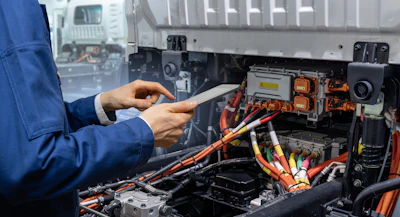
- The largest technology competency gaps exist in electrical, electronics, software, power electronics, and electric machines—areas where technicians lack legacy knowledge
- Modern trucks are increasingly software-dependent, making advanced diagnostic tools, OEM service platforms, and continuous software updates essential for minimizing downtime
- Predictive maintenance powered by artificial intelligence is expected to play a growing role, allowing technicians to identify potential failures before they cause unscheduled downtime
As fleets continue operating a mix of diesel and alternative-powered vehicles, maintenance is becoming one of the biggest factors influencing the success of new powertrain adoption, according to a new report from the North American Council for Freight Efficiency (NACFE).
The report, Messy Middle Powertrain Service & Maintenance, examines how service operations will need to evolve as fleets maintain vehicles powered by diesel, renewable natural gas (RNG), battery-electric and hydrogen fuel cells during what NACFE calls the trucking industry's "Messy Middle"—a period when multiple propulsion technologies are expected to coexist for years.
[Related: These 13 fleets are coming to NACFE's 'Run on Less' event this fall]
While much of the industry's attention has centered on vehicle technology and fueling infrastructure, the report argues that technician training, shop readiness and maintenance capabilities may ultimately determine whether fleets can achieve the uptime needed to justify investments in new equipment.
"The greatest challenge facing all new powertrain technologies is the need for well-trained technicians and well-equipped maintenance shops," Rick Mihelic, NACFE's director of emerging technologies, said in announcing the report. "The best powertrains are useless if the vehicles cannot be maintained in the field."
According to NACFE, maintenance costs extend well beyond routine repairs. Fleets evaluating new truck technologies also must consider investments in shop infrastructure, specialized service equipment, technician certification programs, software licenses, warranty requirements and compliance documentation.
[Related: NACFE warns truck makers are stretched thin as electric, hydrogen, and diesel tech collide]
The report also notes that modern trucks are becoming increasingly software-dependent, making advanced diagnostic tools and OEM service platforms essential for identifying faults and minimizing downtime. As vehicles become more complex, computer-based diagnostics are expected to become the primary maintenance tool, requiring continuous software updates and ongoing hardware investments.
Preparing technicians for that transition remains a significant challenge.
"There is no legacy knowledge that will pour over," said Dr. Mark Quarto, CEO of Quarto Tech Services. "The largest technology competency gaps are in the areas of electrical, electronics, software, power electronics, and electric machines."
Unlike traditional diesel systems, battery-electric, hydrogen and natural gas powertrains require new safety procedures, specialized tools and additional technician training. NACFE says service managers will need to make continuous education and recertification a priority as vehicle technologies continue to evolve.
The report also points to infrastructure maintenance as an emerging operational concern. Fleets investing in behind-the-fence charging or fueling systems will need to maintain those assets alongside their vehicles, while the reliability of public charging and fueling infrastructure could also affect vehicle uptime.
Looking ahead, NACFE expects predictive maintenance supported by artificial intelligence to play a growing role in fleet operations, allowing technicians to identify potential failures before they result in unscheduled downtime. At the same time, increasing vehicle complexity is expected to drive greater specialization among service technicians, potentially requiring fleets to expand maintenance teams with expertise across multiple propulsion technologies.
Rather than signaling a transition away from diesel, the report reflects an industry preparing to support several powertrain technologies simultaneously. For fleets, that means maintenance planning, technician development and shop investments may become just as important as decisions about which vehicles to purchase.