













What you need to know:
- The trucking industry in 2026, freight recession, high diesel prices, geopolitical pressure, and reduced federal incentives is driving a shift toward state-led funding, clean transportation, and sustainable fleet strategies
- Fleet management technology, AI-powered logistics, route optimization, predictive maintenance, and autonomous trucking are helping fleets reduce fuel costs, improve operational efficiency, and strengthen supply chain performance
- Alternative fuels, renewable diesel, biodiesel, natural gas, propane autogas, and battery-electric trucks are expanding adoption, while hydrogen fuel cell trucks face infrastructure challenges and high costs
- Fleet diversification, electric trucks, low-carbon fuels, and energy-efficient technologies are key to emissions reduction, risk management, and staying competitive in the sustainable trucking industry
The 2026 State of Sustainable Fleets Report has arrived, and it opens with the obvious: The trucking industry continues to be in a period of "peak uncertainty" as it enters 2026, shaped by a prolonged freight recession, geopolitical instability, and evolving tariff pressures.
At the same time, the policy environment has shifted dramatically. Federal leadership on decarbonization has receded, with the rollback of key greenhouse gas standards and the expiration of major incentives. In its place, a more decentralized system has emerged driven by state governments, local utilities, and the private market.
Despite the federal pullback, clean transportation funding remains robust, with state, local, and utility programs contributing an estimated $5 billion annually. This shift also means fleets are redefining how they approach sustainability investments.
What does this mean for fleets of all sizes? With diesel prices remaining high, is this the right moment to start the electrification process? Let's take a closer look.
AI and digital fleet management accelerate
Technology adoption is rapidly transforming fleet operations, with artificial intelligence reaching a tipping point. According to the report, roughly 48% of fleet managers now use AI-based tools for route optimization, predictive maintenance, and dispatching.
That impact is significant. AI-powered route planning alone can reduce fuel consumption and operational costs by up to 50%, while improving delivery efficiency and asset utilization.
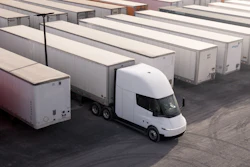
Meanwhile, autonomous trucking continues to advance. New platforms integrating vehicle hardware with sophisticated driving software are bringing the industry closer to scalable automation. While widespread deployment is still developing, there's already a clear trajectory: digitalization is becoming central to fleet competitiveness.
Policy and funding shift to the states
The policy landscape in 2026 is defined by contrast, the report states. Federal rollbacks—including the expiration of the $40,000 commercial zero-emission vehicle tax credit and major cuts to clean transportation programs—have slowed national momentum.
However, state leadership is filling the gap. California continues to dominate with approximately $1 billion in grant funding, while Low Carbon Fuel Standard programs in states like Oregon, Washington, and New Mexico are accelerating the adoption of low-carbon fuels.
Utilities are also playing a critical role. More than 650 electric utilities now offer fleet-focused programs, including infrastructure incentives, managed charging, and favorable rate structures. Together, these efforts are sustaining progress despite federal uncertainty.
What's happening with diesel?
Diesel remains the backbone of the trucking industry, but it is evolving. About 38% of fleets are deploying efficiency technologies such as advanced aerodynamics and powertrain improvements. As a result, some Class 8 trucks are now achieving 10 to 11 MPG—an important and impressive milestone for heavy-duty efficiency.
At the same time, renewable diesel and biodiesel are expanding rapidly as drop-in solutions. In leading markets, these fuels are displacing a growing share of conventional diesel, allowing fleets to reduce emissions without major infrastructure changes.
Natural gas hits a turning point
Natural gas is seeing renewed growth, driven by advancements in engine technology. New 15-liter engines now deliver diesel-equivalent performance, addressing previous concerns around power and range.
This has translated into economic benefits, with a majority of fleets reporting cost savings compared to diesel. Renewable natural gas is also becoming the dominant fuel type in key regions, significantly lowering lifecycle emissions and strengthening the case for adoption.
Propane remains consistent and effective
Propane continues to provide steady growth, particularly in school bus and vocational fleets. Its reliability and established infrastructure make it a practical choice for many operators.
A major advantage is cost. Private fueling agreements can deliver savings of 47% to 63% compared to gasoline, making propane an attractive option for fleets prioritizing affordability and simplicity.
Battery-electric grows
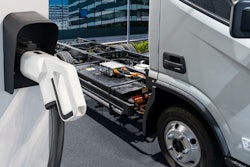
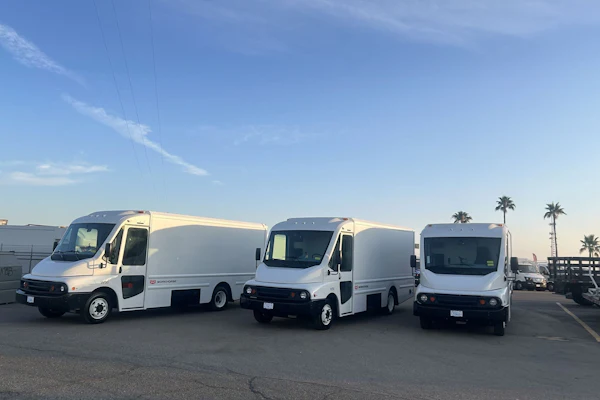
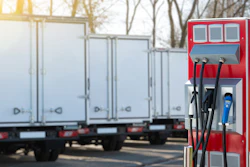
Battery-electric vehicles continue to expand, especially in the medium-duty segment, where registrations grew by 21% in 2025. These vehicles are proving effective for urban and regional applications with predictable routes.
However, the loss of federal incentives may slow momentum in 2026. While adoption continues, fleets are becoming more selective, focusing on use cases where electrification delivers clear operational and economic benefits.
Globally, the picture remains strong, with markets like China pushing forward and demonstrating the scalability of electric trucking at higher volumes.
Hydrogen: Progress meets reality
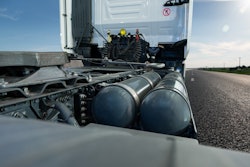
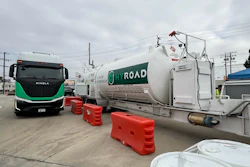
Hydrogen fuel cell vehicles face the most significant challenges in 2026. This isn't surprising given the losses of Nikola and Hyzon. Registrations have declined and the cancellation of major federal funding initiatives has slowed infrastructure development.
While hydrogen still holds long-term potential—particularly for long-haul applications—the near-term outlook is constrained by high costs and limited fueling availability. For many fleets, it remains a future consideration rather than an immediate solution.
Diversification is a winning strategy
In an uncertain and rapidly evolving market, diversification has emerged as the most effective strategy. Fleets are increasingly adopting a mix of technologies—battery-electric, renewable diesel, and natural gas—to balance risk and optimize performance.
This multi-pathway approach allows operators to align solutions with specific duty cycles, regional incentives, and fuel availability. It also provides resilience against policy shifts and market volatility.
Outlook: Steady progress amid complexity
The transition to sustainable trucking in 2026 is no longer linear, the report concludes. It varies by region, application, and access to funding. Despite these complexities, the overall direction is clear:
Fleets are becoming cleaner, more efficient, and more technologically advanced. Those that embrace data-driven decision-making and flexible strategies will be in the best positions to navigate uncertainty and lead the next phase of the industry's evolution.