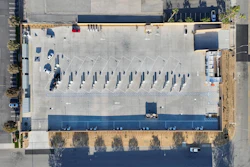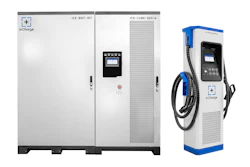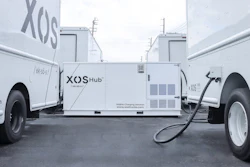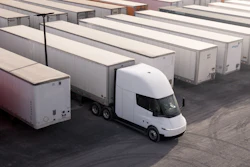














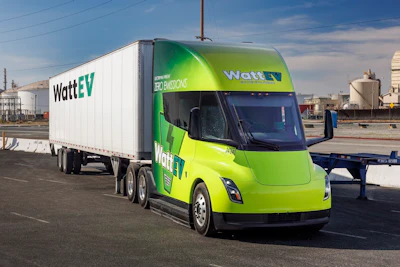
WattEV opened its seventh commercial truck charging depot in Fresno, California, marking the first facility in the Central Valley and a key expansion of the company's zero-emission freight corridor connecting Northern and Southern California. The depot features advanced charging equipment including seven Megawatt Charging System chargers and fifteen 240-kW CCS chargers designed to support long-haul electric trucks like Tesla Semis.
- WattEV's new Fresno depot is located on Highway 99 at 4131 S. Chestnut Ave. and serves as the company's seventh commercial truck charging location in California
- The facility includes seven MCS chargers delivering 30-minute charging sessions and fifteen 240-kW CCS chargers for next-generation heavy-duty electric trucks
- PG&E's Flex Connect program enabled the depot to operate approximately two years earlier than traditional interconnection by managing loads dynamically with up to 3.6 MW capacity
- WattEV plans four Northern California charging hubs with additional facilities at Oakland and Stockton ports launching later in 2024, plus a solar-powered depot near Sacramento Airport
- The network will support 500-mile-range Tesla Semis leased to commercial fleets operating routes between the Central Valley and Port of Oakland
WattEV, a Trucking-as-a-Service (TaaS) and Charging-as-a-Service (CaaS) company, has announced the latest expansion of its California charging network with the opening of a new heavy-duty electric truck charging depot in Fresno, positioning the site as a vital link in a planned zero-emission freight corridor connecting Northern and Southern California.
[Related: WattEV exceeds 75,000 emission-free miles weekly]
The public charging depot, located along Highway 99 at 4131 S. Chestnut Ave., is the company's seventh commercial truck charging location in the Golden State and its first in the Central Valley. The facility is expected to serve freight traffic moving between the Ports of Oakland and Stockton and inland distribution centers throughout the northern San Joaquin Valley.
The Fresno depot is the first of four Northern California charging hubs WattEV plans to develop. Additional facilities at the Ports of Oakland and Stockton are expected to come online later this year, while another solar-powered charging depot near Sacramento International Airport will reportedly break ground this summer.
Once complete, the Northern California network will extend WattEV's existing Southern California charging corridor, creating an electrified freight route linking the Bay Area, Sacramento, the Central Valley and Nevada.
"Our Northern California network is coming together just in time for the arrival of the Tesla trucks," said Salim Youssefzadeh, CEO and co-founder of WattEV. "Northern California is now poised to benefit from the expansion of electrified freight hauling we've helped build in Southern California."
[Related: WattEV CEO knows how to electrify freight at diesel prices]
Designed for long-haul electric trucking
Like WattEV's existing charging hubs, the Fresno site is designed to support next-generation heavy-duty electric trucks with a mix of Megawatt Charging System (MCS) and CCS charging equipment.
[Related: WattEV has big plans for Megawatt charging]
The depot includes:
- Seven MCS chargers designed to deliver charging sessions in approximately 30 minutes or less.
- Fifteen 240-kW CCS chargers for trucks equipped with today's CCS charging standard.
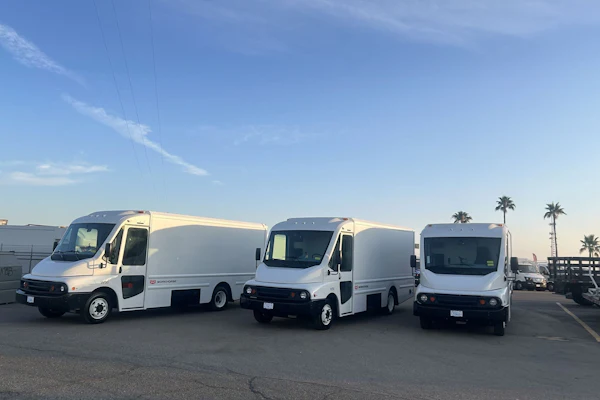
The site will a key role in supporting WattEV's growing fleet of Tesla Semis, which the company says will be deployed on routes between the Central Valley and the Port of Oakland. WattEV plans to lease the approximately 500-mile-range trucks to commercial fleets operating in the region.
Utility partnership accelerates deployment
The Fresno project also highlights a new approach to accelerating heavy-duty charging infrastructure deployment despite grid constraints.
Pacific Gas & Electric (PG&E) supported the site's interconnection through its Flex Connect program, allowing the depot to begin operations before permanent grid upgrades are completed.
[Related: PG&E's EV fleet push shows what's really hard about electrification]
While approximately 1 MW of firm electrical capacity is currently available at the location, Flex Connect enables the site to access up to 3.6 MW during most hours by managing charging loads dynamically. According to PG&E, planned utility upgrades are expected to increase permanent capacity by 2028.
The utility estimates the approach allows the charging depot to begin operations roughly two years earlier than under a traditional interconnection process.
Expanding California's heavy-duty charging network
The Fresno facility joins WattEV's existing charging depots at the Port of Long Beach, Bakersfield, San Bernardino, Gardena, Vernon and Oxnard.
The company's strategy combines public heavy-duty charging infrastructure with truck leasing and fleet services aimed at accelerating commercial EV adoption. As additional Northern California locations come online, WattEV expects its network to support zero-emission freight movements between major ports, inland logistics centers and interstate freight corridors throughout California.
The expansion comes as California continues investing in commercial vehicle electrification, with growing demand for high-power charging capable of supporting Class 8 battery-electric trucks operating regional and port drayage routes.