













What you need to know:
- Clean Energy completes its eighth renewable natural gas (RNG) facility in Jerome, Idaho, expanding U.S. RNG production and supplying transportation fuel markets via interstate pipeline injection
- The East Valley site is a large-scale dairy RNG facility, processing waste from over 35,000 dairy cows using six anaerobic digesters to capture methane and produce negative carbon intensity RNG
- The facility processes more than 5 million gallons of manure daily through advanced wastewater treatment and separation systems, generating pipeline-quality RNG and recycling byproducts into fertilizer and livestock bedding
- The project is approved under the EPA Renewable Fuel Standard (RFS) and California LCFS program, enabling RIN generation and supporting significant greenhouse gas emissions reduction in agriculture and transportation
Clean Energy has announced it's completed construction and commissioning of its eighth dairy renewable natural gas (RNG) facility, located in Jerome, Idaho.
The project, operated in partnership with East Valley Cattle, is now producing and injecting RNG into the interstate natural gas network for use in transportation fuel markets nationwide.
[Related: RNG-fueled trucks 'most compelling carbon reduction strategy,' says Hexagon Agility VP]
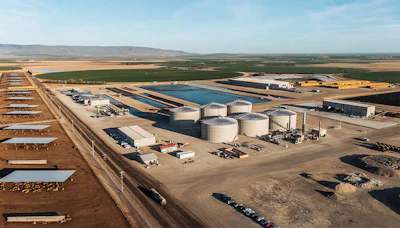
The East Valley site is one of the largest dairy-based RNG production facilities in North America, housing more than 35,000 dairy cows. It uses six anaerobic digesters to capture methane from manure before it can be released into the atmosphere, which then converts it into renewable fuel with a negative carbon intensity.
The facility is designed to process more than 5 million gallons of manure daily using a large-scale wastewater treatment and solids separation system. After processing, the manure is fed into anaerobic digesters that generate RNG suitable for pipeline injection. Remaining byproducts are reused on-site as livestock bedding and agricultural fertilizer, creating a closed-loop waste-to-value system.
"This is probably the most ambitious project we've taken on—the scale, the technology, and the integration of systems are unmatched and quite frankly, extremely impressive," said Will Flanagan, vice president of strategic development at Clean Energy. "We're capturing methane, cleaning it up and injecting it on-site while replacing natural gas that would have been of fossil origin. It’s a double offset renewable energy, and we are proud to be a part of it."
The East Valley Dairy project recorded its first revenue in Q1 of this year. The RNG output has received regulatory approval from the EPA under the Renewable Fuel Standard program, enabling Renewable Identification Number (RIN) generation, as well as certification from the California Air Resources Board (CARB) for Low Carbon Fuel Standard credits. The project is financed through CE bp Renew Co., Clean Energy's joint venture with bp.
[Related: Clean Energy and Maas Energy Works break ground on three new Renewable Natural Gas dairy projects]
Clean Energy further points out that the EPA has determined that agricultural operations account for roughly 10% of U.S. greenhouse gas emissions, while transportation contributes approximately 28%.
By capturing methane that would otherwise be released into the atmosphere, dairy RNG projects significantly reduce lifecycle emissions compared with diesel. In some cases, RNG can achieve negative carbon intensity, reflecting both avoided emissions at the source and displacement of fossil fuels in end-use transportation.