













What you need to know:
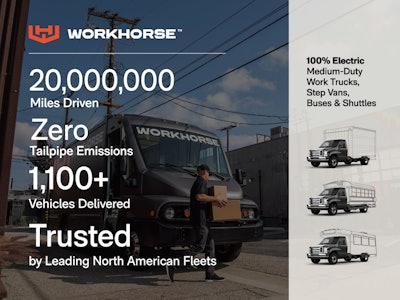
- Workhorse electric vehicles surpass 20 million miles across 1,100+ battery-electric trucks, buses, and shuttles in North America
- Workhorse and Motiv Electric Trucks merge to form a $105 million medium-duty electric truck OEM
- A decade of fleet electrification experience drives advances in battery technology, route optimization, and charging infrastructure
- W56 and EPIC4 electric trucks enter production as Workhorse develops its next-generation Gen 7 platform
Battery-electric commercial vehicles written off already? Think again.
[Related: 2025 was a tough year for commercial ZEVs, but the transition still moves forward in 2026 and beyond]
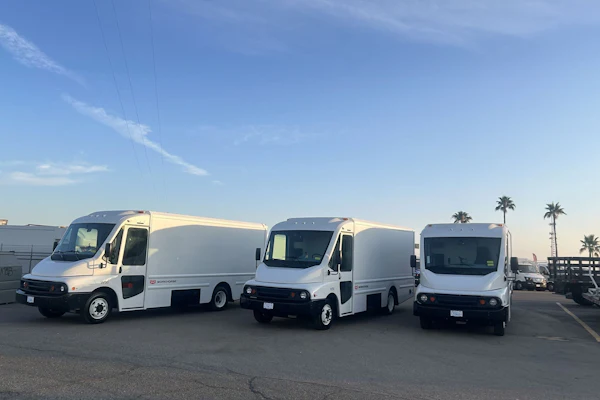
Workhorse Group has announced that its 1,100+ electric vehicles, specifically its W56 and EPIC4 trucks, buses, and shuttles, have surpassed 20 million miles of in-service driving on North American roads.
A few months ago, Workhorse and Motiv Electric Trucks—once rivals in the Class 4-6 battery-electric medium-duty vehicle market—announced they were merging to "create a leading North American medium-duty electric truck OEM." The combined company is valued at roughly $105 million.
With more than a decade of experience producing, deploying, and supporting electric vehicles, Workhorse says it has built a substantial base of data and operational expertise spanning far beyond the trucks themselves. The company's experience includes optimizing fleets for stronger total cost of ownership, maintaining high vehicle uptime, and designing vehicles with ergonomics in mind across the entire truck rather than just the powertrain.
[Related: Workhorse Group expands California dealer network]
"Twenty million miles is a significant threshold which reflects not only the quality and performance of our vehicles, but the trust that our many repeat customers have placed in Workhorse. This achievement reinforces the view that medium-duty is the sweet spot for electrification," said Scott Griffith, CEO of Workhorse. "Every day our vehicles safely and reliably transport the goods, packages and people that are the lifeblood of our economy, all with zero tailpipe emissions and pollution, helping to make life better for everyone along the route."
Additionally, the company has developed expertise in the critical fields of battery chemistry and software configuration that's tailored for fleet use, along with broader vehicle hardware, software, and powertrain best practices. Some additional lessons from its deployments include improving battery range through smart route planning, building cost-effective depot-based charging infrastructure, and refining operational practices such as technician training, operator onboarding, cold-weather operations, and long-term maintenance strategies.
Workhorse has also gained plenty of operational data from its ownership and operation of Stables by Workhorse, an independent service provider for FedEx Ground. The business runs a mixed fleet of electric and internal combustion engine step vans year-round in Ohio, providing the company with real-world validation and operational insights into the performance of last-mile delivery trucks in everyday service.
At present, the company is designing its flexible Gen 7 platform that will boast adoptability for future and in-development technologies, specifically autonomy, safety, and various other software-driven upgrades.
"As we design and engineer our next generation, our plan is to move the industry from an era of unconnected, static hardware assets to always-on, smart nodes in an intelligent network," adds Griffith.
The Workhorse W56 and EPIC4 are now being produced at its manufacturing facility in Union City, Indiana. The plant also builds a variety of commercial vehicles, including step vans, school buses, shuttles, box trucks, stake beds, and refrigerated trucks.