













What you need to know:
- Workhorse Group launches 140 kWh electric step van, expanding its commercial EV lineup with a lower-cost alternative to the 210 kWh W56
- New W56 variant delivers last-mile delivery EV performance with up to 100-mile range, 1,000 cubic feet cargo capacity, and high payload capability for fleet operations
- Starting at $169,000 electric truck price, the model targets fleet cost reduction while maintaining durability, reliability, and ergonomic design
- Backed by the Motiv Electric Trucks merger, Workhorse boosts EV production efficiency, helping fleets reduce fuel costs and hedge against volatile oil prices
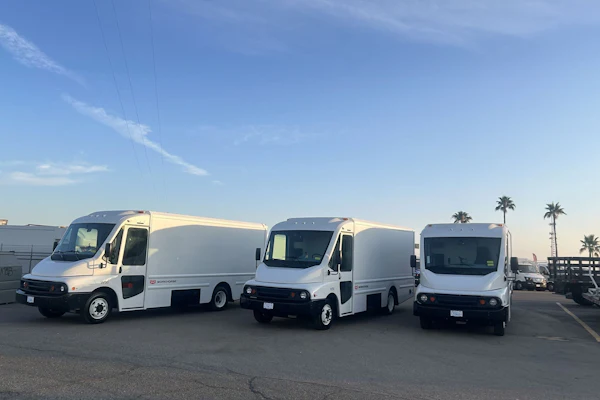
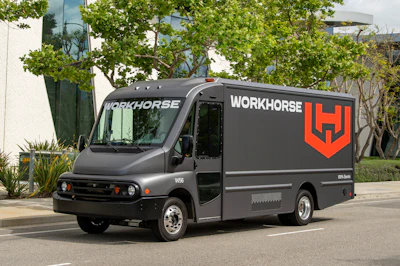
Today, Detroit-based Workhorse Group introduced a new variant of its W56 battery-electric step van, adding a 140 kWh battery option to its commercial electric vehicle lineup.
[Related: Workhorse expands electric W56 platform with Utilimaster body]
The new model shares its platform with the higher-capacity 210 kWh W56 and retains vital features such as a large cargo area, ergonomic design, and durability. It is available in both standard and extended wheelbase configurations.
Pricing is where the 210 kWh and 140 kWh models differentiate; the latter starts at $169,000 and includes a fully integrated composite body, while the more powerful version carries a starting price of around $225,000.
"The new 140 kWh version of our W56 step van is a result of listening to customer feedback and purpose-building a product to meet their needs," said Scott Griffith, CEO of Workhorse. "We've been able to balance the functional needs of fleets—range, durability, reliability and performance—with a lower entry price to offer a 'no-compromise' electric truck."
[Related: Workhorse's EV fleet just crossed 20 million miles]
The standard wheelbase version, measuring 178 inches, delivers an estimated range of about 100 miles per charge at full payload. It offers 1,000 cubic feet of cargo capacity and a payload rating of up to 11,000 pounds, positioning it for a wide range of last-mile delivery applications.
Workhorse manufactures the W56 entirely in-house, a smart move because it allow for tighter control over production and overall quality.
An extended 208-inch wheelbase option is also available, maintaining the same cargo volume while supporting payloads of up to 10,000 pounds. The longer configuration is designed to accommodate larger loads while improving stability for fleet operations.
Ideal reveal timing
Workhorse's timing to reveal a less expensive last-mile delivery EV step-van couldn't be much better given the recent rise in oil prices, which recently exceeded $100 a barrel, but have since dropped. Still, the situation in the Middle East right now has lead to industry analysts to warn that triple-digit oil prices could soon become the norm.
"Commercial ground fleets have similar exposure to spikes in fuel prices as airlines, and the launch of this new model offers fleets a no-compromise option to control costs while still ensuring efficient operations," added Griffith. "Because electricity costs are low, local, and more immune to global oil shocks, we believe every electric truck in a mixed fleet can act as a buffer against the volatility that is once again hammering operators who run entirely on gasoline and diesel."
Workhorse also operates its own FedEx Ground fleet in Ohio through its Stables subsidiary and can already report a 64% drop in fuel and maintenance costs when compared directly against combustion-powered counterparts.
Workhorse, Motiv merger paying off
Last summer, Workhorse and Motiv Electric Trucks announced a merger, which was completed in December, and today's announcement is a direct result.
The combined organization is aiming to reduce production costs by leveraging economies of scale along with improved operations and supply chain integration.
The expanded lineup is intended to give fleet operators greater flexibility as they look to lower total operating expenses and mitigate exposure to fluctuating fuel prices. By offering both 140 kWh and 210 kWh configurations of the W56, the company enables fleets and independent service providers to better match vehicle range and performance to a mix of shorter and longer daily routes.