













What you need to know:
- A Tesla Semi fitted with Full Self-Driving (FSD) testing equipment was spotted by a user on X while driving on public roads in California
- The truck was seen carrying additional sensors and validation hardware typically associated with self-driving vehicle development
- The sighting supports Tesla's previous claims that the Tesla Semi was designed with future autonomous capabilities in mind
- Alongside its autonomous ambitions, the Tesla Semi offers up to 500 miles of range, megawatt charging capability, and will be supported by a rapidly expanding Tesla Megacharger network across major U.S. freight routes
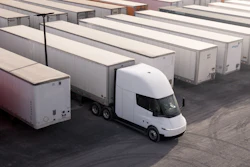
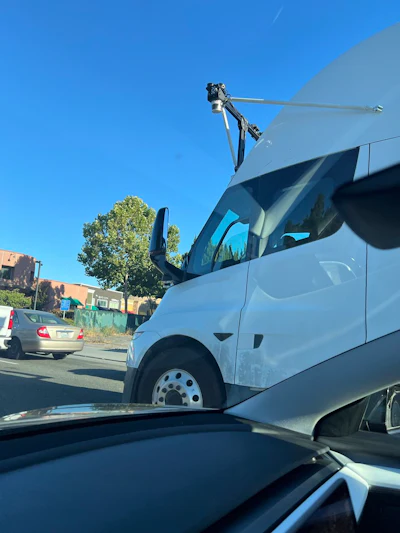
Tesla's all-electric Semi truck, which entered commercial production at the company's Gigafactory Nevada in April, has been spotted on public roads carrying what appears to be specialized equipment for validating the company's Full Self-Driving (FSD) technology.
Photos shared on X by 'Danny' show a Tesla Semi operating in California with an array of external hardware mounted to the vehicle, including additional support structures and sensor equipment.
Members of the Tesla community quickly identified the added hardware as likely being used for autonomous driving development and testing. One observer noted that the setup "looks like autonomous driving test equipment," suggesting the truck may be participating in FSD system validation efforts.
Danny later clarified that the Semi was travelling without a trailer attached at the time it was photographed. This has led some to speculate that the vehicle was being used by Tesla personnel for testing activities near the company's California design and engineering facilities rather than for freight operations.
The sighting adds to growing evidence that Tesla may be expanding its autonomous driving development program to the Semi platform as it continues testing self-driving technologies across its vehicle lineup. The development is particularly noteworthy given Tesla's previous statements that the Semi was designed with future autonomous capabilities in mind.
In addition to its advanced electric powertrain, the truck features an electric power take-off (ePTO) system capable of delivering up to 25 kW of power to trailers and auxiliary equipment.
[Related: A quick tour of Tesla's long-awaited Semi]
Tesla Semi specs and pricing
Tesla will offer the Semi in two variants: a Standard Range model capable of approximately 325 miles per charge and a Long Range version with an estimated 500-mile range. Both configurations are rated for an 82,000-pound gross combination weight and utilize a tri-motor electric powertrain producing up to 800 kW of power.
Tesla claims the Semi delivers energy consumption of approximately 1.7 kWh per mile, while its Megawatt Charging System (MCS 3.2) architecture enables charging speeds of up to 1.2 MW. The company says the truck can recover up to 60 percent of its battery capacity in around 30 minutes, making it suitable for long-haul freight operations.
[Related: Megawatt charging explained: What it is and why it matters]
While Tesla has not officially confirmed pricing, the company is targeting a starting price of approximately $290,000 for the 500-mile Long Range model and around $260,000 for the Standard Range.
Megacharger expansion continues
Last February, Tesla unveiled updated maps detailing its planned Megacharger network across the U.S., highlighting a major expansion of charging infrastructure for the Semi.
[Related: Tesla opens first public Tesla Semi Megacharger in California]
Texas is set to lead the rollout with 19 planned sites, followed by California with 17, underscoring the importance of both states as major freight hubs. The network is being concentrated along key trucking routes, including Interstate 5 on the West Coast and Interstate 10, which connects California to Texas.
Several other states are also included in the expansion plans. Florida, Georgia, Illinois, and Washington are each slated for four sites, while New York and Nevada will receive two. Additional Megacharger locations are planned for Arizona, Colorado, Utah, Oregon, Indiana, Pennsylvania, Maryland, and other freight corridors across the country.