













Article Summary
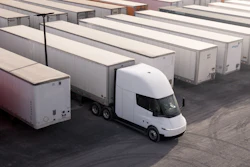
Tesla plans to launch an autonomous version of its Tesla Semi in late 2026 or early 2027, following the expansion of Full Self-Driving technology across its passenger vehicle lineup. The company is ramping up Semi production at its Reno, Nevada facility, with plans to produce thousands of trucks before the end of 2026.
- Timeline: Tesla targets autonomous Semi launch in late 2026 or early 2027, following FSD expansion for passenger vehicles
- Production capacity: The Reno facility can produce up to 50,000 Semi tractors annually once fully operational
- Range options: Two configurations available—Standard Range (325 miles) and Long Range (500 miles)
- Industry impact: Autonomous trucking addresses driver shortages and highway safety while improving carrier efficiency
- Market timing: Multiple autonomous trucking developers expected to expand operations in 2027 as federal regulations advance
Tesla plans to shift greater attention toward developing a self-driving version of its Tesla Semi in late 2026 or early 2027, according to comments made by CEO Elon Musk during the company's Q2 2026 earnings call.
While Tesla's immediate priority remains expanding Full Self-Driving (FSD) technology across its passenger vehicle lineup—including the Model 3, Model Y, and the upcoming Cybercab—Musk said autonomous trucking development will follow as Semi production reaches higher volumes.
"It will definitely be working next year and in time for the scale-up to high production of the Tesla Semi," Musk said during the earnings presentation.
[Related: Tesla opens first public Megacharger station for Semi fleets in California]
Autonomous trucks remain a long-term strategy
Tesla has consistently promoted autonomous trucking as a way to address two major challenges facing the freight industry: persistent driver shortages and highway safety.
According to Musk, self-driving technology could help carriers operate more efficiently while reducing reliance on an increasingly limited pool of qualified commercial drivers. The company has raised similar arguments during previous earnings calls as it outlined its long-term transportation strategy.
The timing also aligns with broader momentum across the autonomous trucking sector. Several developers are expected to begin expanding commercial operations in 2027, while federal policymakers continue working toward a nationwide regulatory framework for autonomous commercial vehicles.
Semi production continues to scale
As autonomous development progresses, Tesla says manufacturing of the battery-electric Semi is continuing to ramp up at its Reno, Nevada, production facility.
The company expects to produce "many thousands" of Semi tractors before the end of 2026. Tesla's dedicated Semi factory has an annual production capacity of up to 50,000 trucks once fully operational.
The first production Semi rolled off the Reno assembly line late last April, marking a major milestone after years of development delays.
Tesla completed construction of the manufacturing facility in late 2025, followed by installation of production equipment during the first quarter of 2026. Site work on the expansion began in 2023 adjacent to the company's Gigafactory Nevada campus.
A long road to market
Tesla originally introduced the Semi in 2017 with plans to begin production in 2019. The program experienced multiple delays before finally entering series production this year.
As we've known for quite some time, the company will offer two North American configurations:
- Standard Range: Approximately 325 miles of driving range.
- Long Range: Approximately 500 miles of driving range.
[Related: Tesla Semi final specifications confirmed by Tesla]
Industry watching closely
The autonomous trucking market is becoming increasingly competitive, with several technology companies preparing commercial deployments over the next few years. As production of the Tesla Semi increases, industry observers will be watching to see whether Tesla can deliver autonomous capabilities on the timeline outlined by Musk.
If successful, the combination of high-volume electric truck production and self-driving technology could represent one of the most significant shifts in commercial transportation since the introduction of battery-electric Class 8 vehicles.