













What you need to know:
- Amazon electric delivery vans surpassed 50,000 vehicles globally in 2025, reaching the halfway point toward the company's target of 100,000 electric delivery vehicles by 2030
- Amazon's growing EV fleet, including thousands of Rivian Electric Delivery Vans (EDVs) in the US, delivered more than 2.4 billion packages last year with zero tailpipe emissions
- In Europe, Amazon has deployed more than 10,000 electric delivery vans, nearly 5,000 of which are Mercedes-Benz electric vans, supported by a rapidly expanding charging infrastructure network
- Beyond last-mile delivery, Amazon is scaling electric trucks, micromobility hubs, rail freight, sea transport, and sustainable aviation fuel (SAF) as part of its broader net-zero logistics and transportation decarbonization strategy
Amazon has deployed more than 50,000 battery-electric delivery vans across its global logistics network, officially reaching the halfway mark toward its goal of putting 100,000 electric delivery vehicles on the road by 2030, the e-commerce giant announced this week.
The company said the fleet delivered more than 2.4 billion packages in 2025 without producing tailpipe emissions, underscoring the growing role of electrification in last-mile delivery operations.
[Related: Amazon increased Rivian EV delivery van fleet by 50% in 2025]
The milestone forms part of Amazon's broader strategy to reduce carbon emissions across its transportation network as it works toward its commitment to achieve net-zero carbon emissions by 2040.
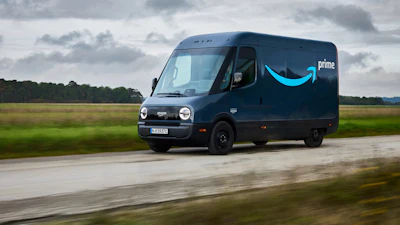
A significant share of Amazon's electric delivery fleet is made up of the custom-built Electric Delivery Van (EDV) developed in partnership with Rivian. The last-mile delivery vehicles are seen by most Americans on a daily basis as they form the backbone of Amazon's US electrification program, with tens of thousands already operating across hundreds of cities nationwide.
Meanwhile, Europe remains a key focus market for the company's decarbonization efforts. By the end of 2025, Amazon and its delivery partners had deployed more than 10,000 electric delivery vans across the region. The expansion includes Amazon's largest-ever European electric vehicle order, with nearly 5,000 Mercedes-Benz electric vans entering service across Austria, France, Germany, Italy and the UK.
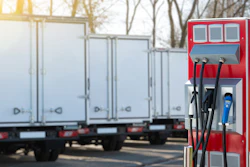
To support fleet growth, Amazon has invested heavily in charging infrastructure, installing tens of thousands of charging points at facilities worldwide, including thousands across Europe.
Alongside larger delivery vehicles, the company is expanding its micromobility operations in urban areas. Amazon now operates more than 70 micromobility hubs across more than 50 European cities, using electric cargo bikes, electric mopeds and pedestrian delivery routes to serve densely populated areas where conventional vans are less practical.
 An Amazon Prime electric delivery tricycle driving in a European city.Amazon
Since launching its first cargo bike deliveries in 2017, Amazon and its delivery partners have completed more than 100 million deliveries using micromobility solutions across Europe, including more than 30 million in 2025 alone.
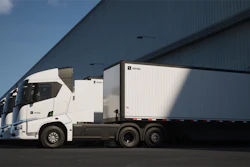
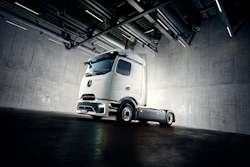
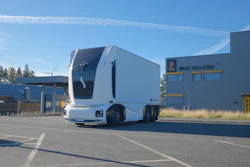
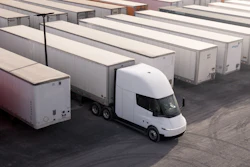
Electrification is also extending into the company's middle-mile network. Amazon currently operates more than 100 electric heavy goods vehicles across Europe and expects to more than double that number by the end of 2026.
Beyond vehicle electrification, Amazon is increasing its use of lower-emission transport modes. The company now moves products across Europe through more than 500 sea and rail routes and reported that 35% of inventory transfers covering distances greater than 310 miles (500 kilometers) were transported by rail or sea in 2025. During the year, 170 million packages were moved using these modes, a 45% increase year on year.
[Related: Amazon rolls out Rivian Electric Delivery Vans in Canada for the first time]
For sectors where electrification remains difficult, including aviation and ocean shipping, Amazon continues to invest in alternative fuels. In 2025, the company procured more than 14 million gallons of blended sustainable aviation fuel for its direct operations.
With electric vans, heavy-duty trucks, micromobility hubs and lower-carbon transport solutions expanding across its network, Amazon is continuing to scale efforts to reduce emissions throughout its global logistics operations.