













What you need to know:
- Greenlane Infrastructure expands into Texas, launching a commercial EV truck charging network along the key I-45 freight corridor
- New high-power charging sites in Dallas and Houston support fleet electrification with CCS and MCS-compatible electric truck chargers
- Facilities enable efficient freight operations with pull-through lanes, overnight parking, and reduced charging downtime
- Expansion boosts zero-emission trucking adoption and strengthens the Texas Triangle logistics network
Greenlane Infrastructure has announced at ACT Expo 2026 that it is expanding its public charging network for commercial electric trucks into Texas, marking its first move beyond California as demand for fleet electrification grows along major U.S. freight corridors.
The company plans to develop high-power charging sites in Dallas and Houston along the I-45 corridor, a key route that connects freight flows from the West Coast, Midwest and the U.S.-Mexico border. The region is among the busiest trucking corridors in the country, making it a strategic target for electric infrastructure investment.
[Related: Greenlane expands Southern California EV freight corridor to Arizona]
CEO Patrick Macdonald-King said the expansion reflects rising demand from fleets transitioning to zero-emission vehicles and the need for charging networks that can scale with that shift. He described the Texas buildout as an early step in developing infrastructure across the "Texas triangle," a major freight network in the state.
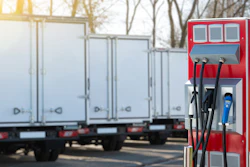
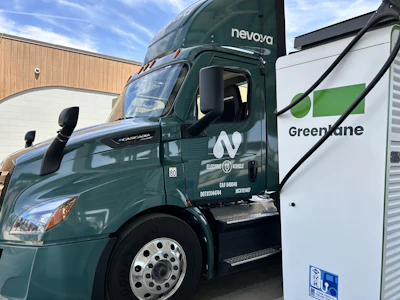
Each site will include multiple pull-through charging lanes, parking for tractors and support for both current and next-generation charging standards. Chargers will be compatible with combined charging system (CCS) connectors as well as megawatt charging system (MCS) technology, allowing fleets to operate existing electric trucks while preparing for newer models. The high-power chargers are designed to align with driver rest periods, reducing downtime compared with traditional refueling.
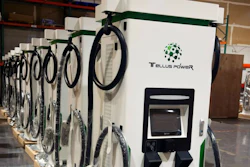
 A row of Greenlane chargers.Greenlane
The locations will also provide space for drop-and-hook operations and overnight parking, enabling continuous freight movement along the corridor. Deciding where to build sites, however, is not a simple task.
[Related: Greenlane breaks ground on LA to Las Vegas EV charging corridor]
"There's a lot that we have to figure out when we're actually putting these things together, and I think one of the things learning and going to market on this is: I think the biggest thing is really you can't go build a site just because it has power. It has to be the right location. It has to be where your customers want it," Greenlane CEO Patrick Macdonald-King told Clean Trucking.
"I think the other thing too on this is that a lot of the workflows that the customers are actually implementing, we have to talk to the customers to understand how they want to utilize the site, right? We can't just build a site for one use case and then expect it's going to work for everybody. So for instance, with the I-10 corridor, which we're opening up right now, we thought that a lot of it was going to be over the road trucking, where a lot of it would be continuing going on I-10 all the way to Texas or whatever else."
Industry partners say the expansion could help accelerate adoption of electric trucking in Texas, a critical logistics market. The new infrastructure is expected to support growing operations along I-45 and beyond, particularly as companies test scalable zero-emission freight models.
 Greenlane's network map for California, Arizona, Nevada, and the Texas triangle.Greenlane
The Texas rollout builds on Greenlane's existing West Coast network, including its flagship site in Colton, California, which opened in April 2025. Additional locations are planned in Blythe, California, and at the Port of Long Beach later this year.
 Greenlane's EV charging app displaying vehicle charging sites.Greenlane
All Greenlane sites operate on the company's digital platform, which allows fleets to reserve chargers, track usage and manage billing. The system has achieved high uptime across the network, a key requirement for commercial fleet operators as electric trucking expands into new regions.