













Workhorse Group is looking to diversify beyond electric commercial vehicles, announcing plans to enter the emerging market for mobile AI data centers with a new line of containerized computing platforms targeted at edge AI applications.
The Ohio-based manufacturer, which completed its merger with Motiv Electric Trucks late last year, said the new product line is currently under development and is expected to leverage many of the engineering, manufacturing and supply chain capabilities it has built through its commercial EV business. Production would take place at the company's manufacturing facility in Union City, Indiana, with initial commercial deliveries targeted for 2027.
[Related: How Workhorse is protecting last-mile fleets from explosive fuel volatility]
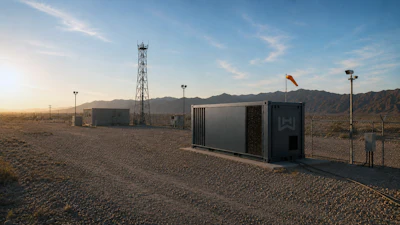
The planned product is designed as a turnkey, compute-ready mobile AI data center that can be deployed where localized computing power is needed. Workhorse said the units are intended for distributed AI and edge computing applications, where processing data closer to the point of use can reduce latency and improve performance.
According to the company, the initial design is expected to include liquid-to-liquid cooling, isolated server racks, an operator workspace with two climate-controlled workstations, integrated uninterruptible power supply (UPS) and battery backup, fire suppression systems, advanced monitoring and security features, and compatibility with multiple external power sources.
The move represents a significant expansion beyond Workhorse's traditional focus on electric delivery trucks and commercial vehicle platforms. The company believes its experience in power electronics, thermal management, ruggedized enclosures, embedded systems, vibration isolation and mobile connectivity provides a foundation for developing mobile AI infrastructure.
Workhorse cited growing demand for containerized data centers as a key driver behind the initiative. Industry forecasts project strong growth in the sector over the coming years, fueled by expanding AI workloads, edge computing deployments, 5G infrastructure, disaster recovery needs and increasing demand for flexible computing capacity across industries including telecommunications, financial services and information technology.
Rather than marketing the systems directly to end users, Workhorse plans to pursue a partnership strategy with suppliers and data center developers that would integrate and deliver complete solutions to customers.
Chief Executive Officer Scott Griffith said the initiative reflects the company's broader strategy following its merger last year to evolve into a broader industrial technology company while creating additional revenue opportunities beyond commercial electric vehicles.
Griffith also said increased manufacturing volume from the AI data center business could improve factory utilization and help reduce production costs for the company's electric truck lineup.
In addition to the AI data center announcement, Workhorse said development continues on its modular chassis and cab chassis platforms, with production of those vehicles also expected to begin in late 2027.
The company expects to provide additional updates on both its commercial vehicle business and the new AI infrastructure program during its second-quarter earnings call on Aug. 13.