













What you need to know:
- The Fluke FEV500 acts as a virtual EV for Level 3 charger diagnostics, safety checks, and interoperability testing
- DC fast charger testing platform designed to improve EV charging reliability and reduce fleet downtime
- Fleets can simplify EV charger maintenance with one portable tool combining multimeter, insulation, and oscilloscope functions
- Support for ISO 15118 and DIN SPEC 70121 helps improve EV fleet charging uptime and speed troubleshooting
Everett, Washington-based Fluke announced this week the debut of the FEV500, a new diagnostic platform aimed at helping commercial fleet operators improve the reliability and uptime of DC fast-charging infrastructure.
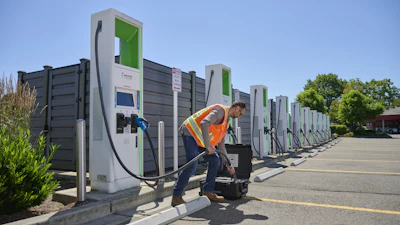
The portable testing system is designed specifically for Level 3 DC charging stations, which are increasingly critical for fleet operations that depend on rapid vehicle turnaround times and dependable charging availability.
But unlike traditional charger testing methods that may require multiple instruments or even a physical EV, the FEV500 functions as a virtual electric vehicle, enabling technicians to validate charger safety, interoperability, and performance from a single device.
How fleets benefit
For fleets, charger downtime could turn into operational disruption, delayed routes, and lost productivity—all financial constraints. The launch comes as fleet operators continue investing in electrification while still dealing with concerns regarding charging infrastructure reliability and maintenance efficiency.
The FEV500 is intended to streamline service workflows by consolidating several diagnostic functions—including multimeter, insulation testing, and oscilloscope capabilities—into a single portable platform. Fluke says technicians can perform comprehensive tests without opening the charging cabinet, thus reducing maintenance times and minimizing station outages.
Fluke claims the system also supports industry-standard communication protocols, including ISO 15118 and DIN SPEC 70121, allowing operators to verify compatibility between chargers and EVs before issues impact fleet operations.
[Related: Go inside America's busiest electric truck charging depot]
 The portable Fluke FEV500Fluke
"The EV transition depends on reliable fast-charging infrastructure, particularly for fleets that cannot afford unexpected downtime," said Theo Brillhart, technology director of R&D at Fluke. "The FEV500 is designed to help operators identify problems faster, standardize testing procedures, and keep chargers operational."
The platform includes automated pass/fail workflows and guided testing procedures intended to simplify diagnostics for field service teams. By reducing the need for specialized training and multiple testing tools, the company said fleets can improve maintenance consistency across depots and charging locations.
The ability to simulate real-world charging conditions without connecting an actual vehicle may also help fleet operators reduce service costs and accelerate charger commissioning and troubleshooting.
[Related: ChargePoint unveils Express Solo, an ultra-fast standalone EV charger aimed at mass-market]
As electric delivery, transit, and service fleets continue scaling nationwide, infrastructure uptime is emerging as a key operational metric. Industry data has shown persistent reliability challenges across public charging networks, increasing pressure on operators to adopt faster and more standardized maintenance practices.
Fluke positions the FEV500 as part of a broader effort to help commercial and fleet charging networks improve charger availability while reducing maintenance complexity and operational disruption.