













What you need to know:
- Workhorse W56 electric van price cut slashes costs by up to $61,000, with models now starting at $196,000
- Limited-time EV fleet promotion (April–Sept. 2026) helps offset rising diesel fuel prices above $4 per gallon
- Motiv Electric Trucks merger synergies drive lower production costs through improved scale and supply chain efficiencies
- New 140 kWh W56 delivery EV offers a lower-cost last-mile solution starting at $169,000 with ~100-mile range
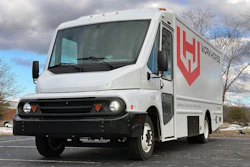
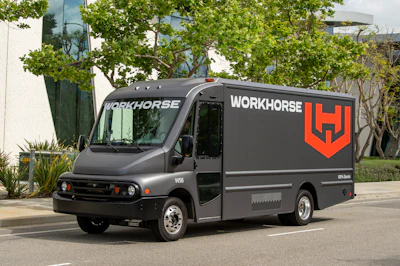
Workhorse has announced an immediate and substantial price reduction across its entire lineup of battery-electric W56 step vans.
Starting from April 1 through September 30, 2026, the Detroit-headquartered company is offering promotional pricing on its W56 step vans, with the standard wheelbase (178-inch, 210 kWh) model reduced to $196,000 from $255,000—a $59,000 savings—and the extended wheelbase (208-inch, 210 kWh) version now starting at $204,000, down from $265,000, saving customers $61,000.
The pricing adjustment is available only through authorized Workhorse dealers.
[Related: Workhorse's EV fleet just crossed 20 million miles]
The company says the promotion is designed to help commercial fleets offset rising operating expenses, particularly as elevated diesel fuel prices continue to push budgets too high for some. Unfortunately, some analysts are warning that the increased cost of diesel (now over $4.00/gallon in some states) could last for several years.
How Workhorse lowered pricing
Workhorse added that the lower pricing has been made possible in part by early cost savings following its December 2025 merger with Motiv Electric Trucks, with the combined company reducing production expenses through greater scale, improved operations and supply chain efficiencies, and other ongoing refinements to its vehicle design and manufacturing costs.
"We know exactly what this oil price environment is doing to fleet operators, because we live it every day," said Scott Griffith, CEO of Workhorse. "Through Stables by Workhorse, our own FedEx Ground ISP operation, we see firsthand how fuel costs are hammering route economics. Lowering the purchase price of the W56 is one of the most direct ways we can help our customers. As package delivery companies typically plan months in advance of the busy holiday season, there's never been a better time to add electric trucks to their fleets."
Lower-cost 140 kWh W56 expands lineup
Last month, Workhorse introduced a new 140 kWh version of its W56 electric step van, expanding its commercial EV lineup with a lower-cost alternative to the 210 kWh model. Starting at $169,000, the new variant is designed for last-mile delivery, offering up to 100 miles of range, roughly 1,000 cubic feet of cargo space, and strong payload capacity while maintaining durability and driver-focused design.
[Related: 2025 was a tough year for commercial ZEVs, but the transition still moves forward in 2026 and beyond]