













What you need to know:
- Tesla Semi adoption is accelerating as ArcBest adds two electric Class 8 trucks to its ABF Freight fleet following a successful 2025 pilot program
- The long-range Tesla Semis will operate across California and Nevada, helping the company evaluate electric truck performance, reliability, and fleet efficiency in real-world freight operations
- During testing, the Tesla Semi achieved about 1.55 kWh per mile and received positive driver feedback for its comfort, visibility, and performance on challenging routes
- With Tesla Semi production ramping up and major fleet orders such as WattEV's 370-truck purchase, momentum is building for zero-emission trucking and electric freight transportation
The rollout of the Tesla Semi is continuing to accelerate.
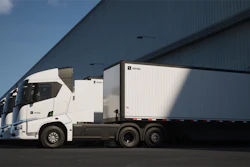
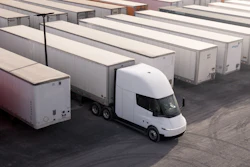
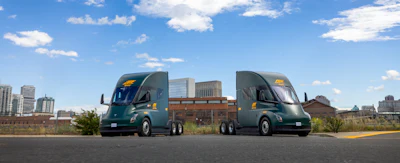
Arkansas-based logistics company ArcBest has announced it's acquired two Tesla Semi trucks for its less-than-truckload (LTL) subsidiary ABF Freight, expanding its evaluation of battery-electric heavy-duty vehicles following a 2025 pilot program.
The long-range electric tractors will primarily operate on linehaul routes in California, with planned service extensions to Reno, Nevada, and potentially other markets. The deployment broadens the scope of ABF's earlier pilot, which focused on the Reno–Sacramento corridor, allowing the carrier to assess vehicle performance across a wider range of lanes and operating conditions.
According to ABF President Matt Godfrey, the pilot provided key operational insights into the viability of electric Class 8 trucks within an LTL environment. The addition of the Teslas is intended to support further evaluation of the technology ability to meet the company's requirements for safety, reliability and performance.
The company said it will continue monitoring vehicle performance before making additional fleet investment decisions. The assessment will compare the electric trucks against conventional diesel equipment using metrics that include total cost of ownership, operational efficiency, safety performance and driver experience.
During the 2025 pilot, the Teslas recorded an average energy efficiency of approximately 1.55 kilowatt-hours per mile. With the trucks now operating across a broader segment of the network and under a wider range of conditions, ArcBest expects to gather more comprehensive data on day-to-day performance and operational suitability.
Driver feedback from the pilot was generally positive, with operators citing visibility, comfort and vehicle performance as key strengths. The trucks also reportedly performed reliably on challenging routes, including the climb over Donner Pass in the Sierra Nevada Mountains. Early driver feedback has also been solid, as they highlighted ease of operation and overall comfort while maintaining the capabilities required for LTL freight operations.
Despite being nine years since its introduction, the Nevada-built Tesla Semi is due to begin series production this year. The first production-spec unit rolled off the assembly line in late April while Tesla continues to deploy its Megacharger network in key locations, beginning in Ontario, California and the surrounding areas.
Last month at ACT Expo, Trucking as a Service (TaaS) company WattEV announced a 370-unit Tesla Semi order, the largest single deployment of HD electric trucks in the California to date. WattEV confirmed that 50 of those vehicles will enter service this year while the remaining Teslas will arrive in 2027.
To recap, the Tesla Semi Standard Range model offers approximately 325 miles of range, weighs less than 20,000 pounds, and features a tri-motor powertrain producing up to 800 kW of power. The Long Range version boosts range to approximately 500 miles with a curb weight of 23,000 pounds. Both configurations are rated for an 82,000-pound gross combination weight, achieve energy consumption of 1.7 kWh per mile, support charging to 60% in 30 minutes when plugged into a Megawatt Charging System (MCS) 3.2, and include up to 25 kW of electric power takeoff capability.
The Tesla Semi Standard Range and Long Range costs $260,000 and $290,000, respectively, though that's before any incentives, such as those from California's HVIP program.
[Related: California's HVIP surpasses $1B in redeemed vouchers for MD, HD clean vehicles]